

Pressure Washing for South Florida Properties
South Florida exteriors face a steady mix of humidity, coastal exposure, rain, and everyday buildup. For property owners and managers, keeping those surfaces presentable is not only a matter of appearance. The cleaning method, timing, access plan, and protection of surrounding areas all affect how smoothly the work fits into daily operations.
Pressure washing can be an effective choice for compatible, durable exterior surfaces, but it is not suitable for every material or condition. A professional assessment should consider the surface, its age and condition, nearby equipment, access, water requirements, height, and the property's operating needs before a method is selected.
That practical review is especially important across Miami-Dade, Broward, and Palm Beach, where weather can influence scheduling and coastal conditions can affect maintenance needs. The right starting point is understanding how the surface and site determine the safest, most appropriate approach.
When is pressure washing the right choice for an exterior surface?
Pressure washing can be effective for removing firmly attached soil, buildup, and other exterior contamination, but the right choice depends on more than how dirty a surface looks. A professional assessment considers the material, its current condition, the type of soil present, and the result the property owner wants to achieve.
Durable, compatible surfaces may tolerate pressure washing when the pressure, nozzle, distance, and cleaning solution are selected carefully. More delicate finishes, aging materials, painted areas, joints, seals, or surfaces with existing damage may call for a lower-pressure approach or another method. The goal is to clean the surface without creating avoidable damage, driving water into vulnerable areas, or disturbing coatings and finishes.
The assessment should also distinguish between loose debris, embedded soil, organic growth, old coatings, and stains. Each condition can respond differently to water pressure and cleaning agents. When the source of the buildup is unclear, testing a small area and reviewing the material can help guide the plan before a full service begins.
Access also matters. A review should account for the building's height, surrounding structures, landscaping, vehicles, occupied areas, and the space available for equipment and hoses. Water access, service-vehicle space, staging, and a safe execution zone all affect whether pressure washing is practical for a specific location. On a multi-story or active commercial property, the safest plan may combine methods or use different access equipment across separate areas.
In South Florida, humidity, coastal exposure, weather, and recurring maintenance needs can influence both the type of buildup and the timing of service. A method that suits one elevation or material may not suit another. Safety planning should also protect people, sensitive equipment, and nearby operations. Pressure-cleaning guidance from the UK Health and Safety Executive highlights controls such as barriers, safe hose management, equipment protection, and keeping spray away from people.
Skybots begins with an on-site inspection and feasibility review before defining the work. That process helps identify the appropriate method, selected surfaces, operational requirements, and site controls instead of treating pressure washing as a universal solution.
Pressure washing or soft washing: how should you choose?
Pressure washing and soft washing are not interchangeable decisions for every property. Pressure washing uses controlled water pressure to remove buildup from compatible surfaces. Soft washing uses a lower-pressure approach and may be more appropriate when the finish, material, or surrounding area needs gentler treatment. The correct choice depends on the surface and the condition being addressed.
A professional assessment can also recommend different methods for different elevations or materials on one property. Property owners comparing options should ask what method is proposed, why it fits the surface, how nearby areas will be protected, and what access conditions are required. For more context, see this guide to soft washing for delicate surfaces.
Method selection should be explained in practical terms. A clear plan identifies the surfaces included, the areas that need protection, the equipment setup, and the expected site controls. This gives the owner a useful way to review the proposal before work starts, especially when several materials share one facade or property boundary.
What does a professional pressure washing plan include?
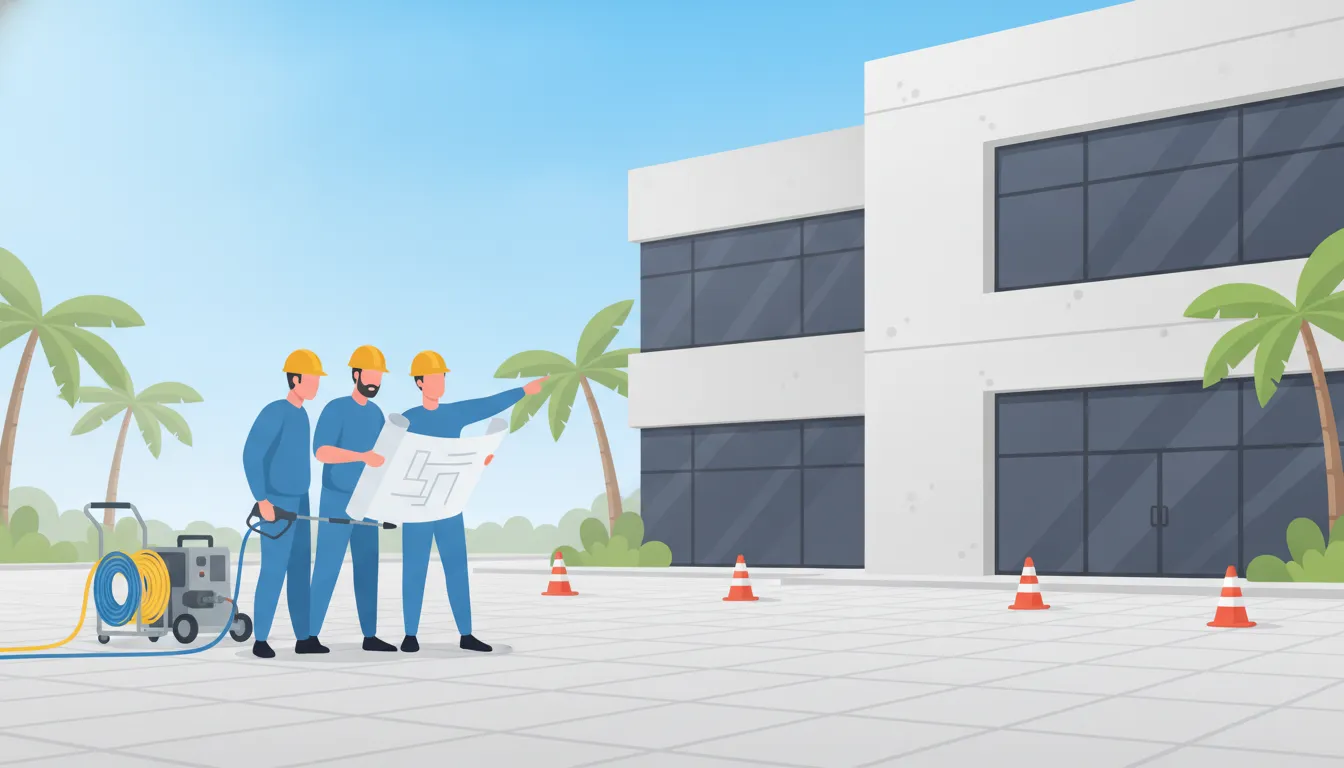
A well-planned project does more than identify a dirty surface. It connects the cleaning method to the building, the people using the site, and the practical conditions required for safe execution. A professional pressure washing plan typically follows these steps:
- Inspect the property and surfaces.
The process begins with an on-site inspection and feasibility review. The team evaluates building characteristics, height, materials, existing conditions, surrounding areas, access points, and operational challenges. This helps determine whether pressure washing is appropriate or whether another method better protects the surface.
Define a custom scope.
The written scope identifies the selected surfaces, expected work areas, operational considerations, resource needs, and planned schedule. It should be specific enough for property owners and managers to understand what will be cleaned and what conditions could affect execution.
See how the inspection and planning process works
.
- Confirm water, vehicle, and staging access.
Planning accounts for available water access, service-vehicle space, equipment staging, clear routes, and a suitable area for the work. These details matter on residential properties as well as active commercial or industrial sites, where blocked access can interfere with normal operations.
- Coordinate safety and site activity.
Before work begins, the team evaluates hazards, establishes designated safety zones, and communicates with property personnel. Where applicable, execution planning also considers flight paths, nearby occupants, sensitive equipment, and real-time monitoring. Weather conditions are reviewed as part of scheduling, since service should take place only under suitable conditions.
- Execute, document, and review.
Operators follow the approved scope and selected method, then review the completed work with the customer. Skybots documents the service and provides a three-day window for feedback and free touch-ups for residue or missed areas. This final step helps confirm that the result matches the agreed plan and identifies any follow-up needs.
How does South Florida weather affect pressure washing schedules?
South Florida scheduling requires attention to more than an available calendar opening. Rain, wind, humidity, coastal exposure, and the condition of the property can all affect when pressure washing should take place. A professional team monitors the forecast and confirms that the site supports safe, controlled execution before work begins.
Property managers should also consider how the work fits around tenants, customers, employees, deliveries, vehicles, landscaping crews, and other site activity. Clear access and a defined staging area can make a planned service window more practical. On active commercial or industrial properties, coordination may be just as important as the cleaning method itself.
There is no responsible universal turnaround promise for every South Florida property. The scope, surface condition, access requirements, weather, and operating constraints determine the schedule. A flexible plan helps protect the property and reduces avoidable disruption when conditions change.
Recurring maintenance can also help owners plan ahead. Instead of waiting until buildup becomes a visible problem. Managers can discuss suitable service intervals after the first assessment and adjust them to the property's exposure, materials, and use.
Planning ahead also gives the property team time to notify occupants, protect access routes, move vehicles, and coordinate with vendors. Those details are easy to overlook when cleaning is treated as an isolated task. They become especially important when a property has shared entrances, active storefronts, loading areas, or equipment near the work zone.
A useful schedule should remain responsive to what the property team observes. If certain elevations collect more residue or weather exposure affects one side of a building, future scopes may need to be adjusted. The goal is a repeatable maintenance plan that respects the building and the people who use it.
Where can pressure washing fit across residential and commercial properties?
Pressure washing may play a role in maintaining compatible exterior areas at high-end homes, multi-story residential properties, office buildings, shopping centers, public-facing structures, and selected industrial sites. The application is not defined by the property label alone. Materials, height, access, surrounding conditions, and the desired result still determine the appropriate method.
For a residential property, planning may focus on protecting landscaping, outdoor living areas, vehicles, and occupants. For a commercial site, the scope may need to account for customer visibility, tenant schedules, deliveries, parking, entrances, and business continuity. Industrial work can require additional attention to restricted areas, equipment, access controls, and site-specific safety procedures.
The same property may need different work zones. A front entrance could require careful coordination with visitors, while a rear service area may allow a separate schedule. Breaking the scope into clear zones helps managers communicate expectations and keeps the selected method tied to the actual conditions at each area.
Skybots supports exterior cleaning for residential, commercial, and industrial properties. Its Skybots exterior cleaning services outline the types of properties and applications the company evaluates. A consultation should still begin with a feasibility review rather than assuming pressure washing is appropriate across an entire site.
What should property owners expect after the work?
The service should end with more than equipment leaving the property. A post-service review checks the completed work against the agreed scope and gives the owner or manager an opportunity to identify details that need attention. Documentation can also support internal maintenance records and future planning.
Skybots provides a three-day window for client feedback and free touch-ups for residue or missed areas. That quality step creates a clear path for follow-up instead of leaving property owners to determine what happens after the crew departs.
Long-term expectations should remain realistic. Results and maintenance needs vary by material, exposure, weather, surrounding conditions, and the type of buildup. A property assessment and clear scope create a better basis for deciding when future service may be appropriate.
Frequently Asked Questions
How much does pressure washing cost?
There is no reliable single price because cost depends on the surfaces included, property size, access, height, condition, water requirements, staging, and operational constraints. A professional estimate should follow an inspection and define the scope before work begins. That approach gives property owners a clearer basis for comparing options without relying on a generic square-foot figure.
What is the difference between pressure washing and power washing?
The terms are often used interchangeably, but power washing commonly refers to pressure washing that also uses heated water. Whether heat is appropriate depends on the material, soil, surrounding conditions, and cleaning objective. The important decision is not the label. It is selecting pressure, temperature, water use, and technique that fit the surface without creating avoidable risk.
How difficult is pressure washing?
Small, accessible areas may look straightforward, but professional work requires more than operating a machine. Spray control, water management, hose handling, surface protection, drainage, access, and safety zones all matter. Larger or elevated properties also require coordination with occupants and site personnel. A qualified team evaluates these conditions before choosing equipment and beginning the work.
Which surfaces are suitable for pressure washing?
Suitability depends on the material, condition, height, access, and surrounding environment. Some durable exterior surfaces may respond well to pressure, while delicate finishes, aging materials, or sensitive areas may call for soft washing or another method. An inspection helps identify the appropriate approach instead of assuming one technique works across the entire property.
When should South Florida properties schedule pressure washing?
Schedule the work when the forecast and site conditions support safe execution. South Florida humidity, coastal exposure, rain, wind, property access, and building operations can all affect planning. Weather monitoring should be part of the process, and the final schedule may need to remain flexible. Property managers should also plan around tenants, visitors, vehicles, and other activities that could be disrupted.
Get started with a clear cleaning plan
Every property has different surfaces, access conditions, surroundings, and maintenance goals. A thoughtful evaluation helps identify the appropriate cleaning method and define the work before scheduling begins. Learn how Skybots evaluates a property and plans the work, or contact us to discuss the right next step for your South Florida property.


Comments