

Aventura Commercial Exterior Cleaning: What Should Managers Include in a Scope?
A useful Aventura commercial exterior cleaning scope states what will be cleaned, how the site will be accessed, which methods suit each surface, and how the completed work will be reviewed. Start with an on-site inspection, then document building conditions, tenant needs, water access, timing, and exclusions before comparing proposals.
What should an Aventura commercial exterior cleaning scope define first?
Begin with the property and the outcome the team needs. “Clean the exterior” is too broad to guide a crew or help a manager compare quotes. Identify the buildings, elevations, surfaces, and problem areas included. Note what is out of scope, too.
An inspection can uncover differences that are easy to miss from the ground. One elevation may collect more salt residue or windblown debris. Another may have shaded areas, heavy traffic below, or limited access. A written scope should reflect the actual site rather than assume every wall or window needs the same treatment.
- Property details:
building address, number of structures, approximate height, access points, and areas open to tenants or visitors.
- Surfaces:
windows, frames, facade materials, entry canopies, signage, awnings, or other requested exterior features.
- Observed conditions:
visible soil, salt residue, organic growth, staining, bird activity, and any existing damage that needs review.
- Desired result:
routine appearance maintenance, a seasonal refresh, preparation for an event, or attention to a specific issue.
- Limits:
excluded surfaces, areas needing repair first, and conditions that may affect the result.
Keep the scope tied to observable conditions. If a stain may be permanent or a surface may be damaged, record it before work starts rather than implying a cleaning method will correct it. A dated set of site photos can make the discussion more precise.
For a practical walkthrough, ask the site contact to use the same route during the inspection that a crew would follow. Start at the main entrance, note each elevation in a consistent order, and record which areas are visible from public walkways or tenant spaces. Mark a feature as included only when its location and intended result are clear. For example, “east entrance canopy, exterior face only” is easier to verify than “clean canopies.” This small level of detail also helps when the property team revisits the scope for the next service cycle.
How does an inspection shape aventura commercial exterior cleaning?
An inspection turns a general request into a workable plan. The manager and service provider can review access, surface type, water availability, building use, and nearby activity. This is also the time to discuss whether drone-assisted cleaning is suitable for a particular area or if another approach is more appropriate.
Skybots describes a three-story minimum and an approximate upper suitability limit of 19 to 20 stories for its drone cleaning work. The property still needs to fit the operating conditions, including clear flight paths and on-site water access. Height by itself does not confirm suitability. The inspection should establish whether each elevation and task can be approached as planned.
For context on the service process, see how drone window cleaning works. Managers can also review Skybots commercial cleaning services and the overview of drone facade cleaning and project costs before a site discussion.
The inspection should capture practical constraints rather than just measurements. Ask whether equipment can be positioned without blocking a main entrance, whether water is available where needed, and whether landscaping, canopies, or neighboring structures affect access. Note the building's operating hours and any delivery windows or scheduled events.
Managers can prepare by gathering a current site plan, access instructions, a list of tenant contacts, and any known restrictions before the visit. Walk the site with the person who handles daily operations, not only the person approving the budget. They may know that a loading area is busy at a certain hour or that a door must remain clear for deliveries. Separate confirmed conditions from items that still need checking, such as a water connection or permission to use a particular staging area. That distinction gives the provider a clear set of questions to resolve before writing the proposal.
What should an aventura commercial exterior cleaning scope specify about surfaces and methods?
Match the proposed method to the material and its condition. A scope can list each surface separately, along with the intended approach and any preparation or limits. Avoid vague language such as “pressure wash all exterior surfaces.” Different materials may call for different pressure levels or another method entirely.
Area or condition | Scope detail to specify | Method discussion |
Exterior windows and frames | Elevations, glass and frame coverage, visible deposits, and any exclusions | Confirm whether water-fed pole cleaning or drone-assisted washing suits the access and surface. |
Facade sections | Material, height, staining, sensitive details, and pre-existing damage | Compare soft washing, controlled pressure washing, or another suitable method after inspection. |
Canopies, signs, or ledges | Exact locations, finish, nearby entrances, and fragile components | Agree on a suitable low-impact approach and note any areas that should not be treated. |
Areas with persistent staining | Photographs, stain location, history if known, and expected outcome | Ask for a test or a clear statement of limitations before including the area. |
Do not assume one technique belongs everywhere. Commercial pressure washing may fit some durable surfaces, while soft washing can be considered for other exterior materials. Water-fed pole window cleaning may be appropriate where the access and height allow. Drone-assisted work is another option for suitable areas, not an automatic answer for every building.
When reviewing the method for each surface, have the provider explain what the crew will apply, how the area will be prepared, and what nearby elements need protection. Ask whether a sample or test area is appropriate when the material or stain is unfamiliar. Clarify that cleaning is intended to remove surface soil, not repair failed coating, damaged sealant, or permanent discoloration. If a building has more than one material, the scope should make the transitions clear, such as where a masonry section ends and a window system begins.
Property teams looking at a more limited scope can read about soft wash roof care and exterior surface cleaning options. These are useful starting points, but the inspection should determine what fits the specific property.
How should the scope cover access, safety, and daily operations?
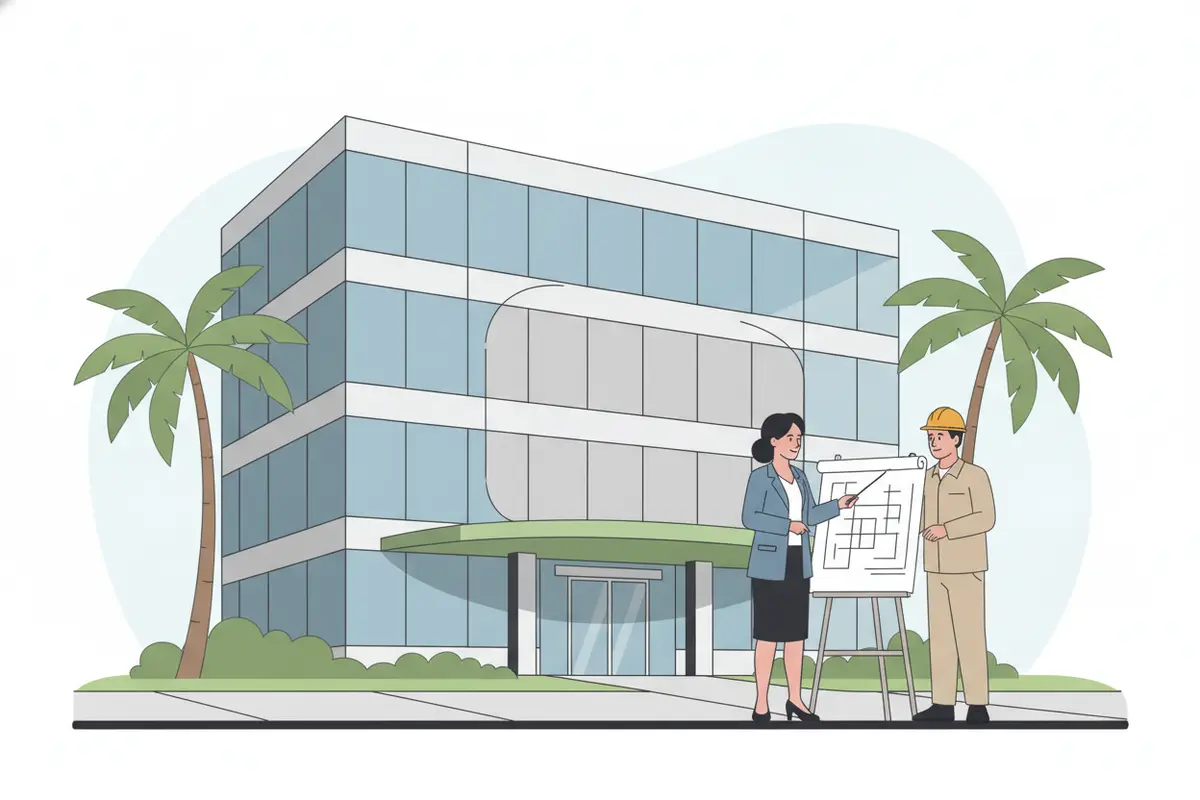
Access planning is part of the cleaning scope, not a detail to settle on the morning of service. Record where crews may stage equipment, how they will reach each work area, and which entrances, sidewalks, or parking spaces may need temporary coordination. If a lift, scaffolding, or another access method is under consideration, include it in the proposed plan and clarify who coordinates it.
List the measures needed to protect building users and the work area. Depending on the site, this may include scheduling around pedestrian traffic, marking a work zone, coordinating with security, or notifying tenants before activity begins. Ask the provider to explain its operating procedures and the responsibilities expected of the property team. The U.S. Occupational Safety and Health Administration provides general workplace safety information at OSHA.gov; project-specific planning should still be discussed with the service provider and relevant site contacts.
For drone-assisted work, confirm that the provider will assess the flight path, nearby activity, and site conditions before scheduling. Skybots states that its operators follow FAA-compliant flight operations and that its equipment uses batteries. Include a clear weather and rescheduling process, since outdoor work depends on suitable conditions.
Operations planning also protects the customer experience. Identify high-traffic periods, loading zones, resident or tenant communications, and any event dates. Set out how the provider will report a change in conditions, pause work if necessary, and confirm when the affected area is available for normal use.
Turn these needs into a simple day-of-service sequence. For instance, the team might begin on an elevation away from the busiest entrance, move to the less active side during delivery hours, and leave the main entry for a pre-agreed window. The sequence will depend on the property, but writing down the preferred order helps building staff prepare. Also identify who can approve a minor adjustment if weather or site activity changes. A named decision-maker and a reliable way to reach them help avoid delays caused by unclear authority.
What should the proposal and quote make clear?
A useful proposal connects the inspection findings to the work being priced. It should let a manager understand what is included and compare offers on a like-for-like basis. Skybots determines pricing through an on-site inspection and custom quote, rather than a universal rate. Cost can depend on the area, surfaces, access needs, condition, method, and coordination requirements.
Included buildings, elevations, and surface areas, with any exclusions clearly stated.
Recommended method for each area and the reason it fits the material and access.
Work sequence, estimated duration, and any areas that require separate scheduling.
Site responsibilities, including water access, notices, access permissions, or traffic coordination.
Price basis, applicable taxes or additional charges, payment milestones, and quote validity period.
How the provider will document completed areas, report issues, and respond to feedback.
Weather delays, rescheduling, and conditions that could require a revised scope or quote.
Do not compare proposals by total price alone. Check that they cover the same surfaces, access plan, preparation, and review process. If one quote is much shorter, ask which site assumptions it relies on. A defined scope helps reduce misunderstandings; it does not mean every condition can be predicted before work begins.
One useful comparison exercise is to put each proposal beside the same area list and check it line by line. Does each include the same elevations, frames, canopy faces, and access constraints? Are exclusions and possible additional charges easy to find? If a proposal uses a broad phrase such as “building wash,” ask the provider to identify the exact surfaces behind that phrase. A short clarification before approval is easier than resolving different expectations after service.
For a broader look at proposal review, use this guide to choosing a facade cleaning company. Managers may also find the step-by-step maintenance risk guide helpful when documenting ownership and follow-up actions.
How can managers coordinate the work and verify completion?
Before service, assign a property contact who can answer access questions and communicate with tenants or building staff. Share the agreed work window and identify how changes will be announced. If multiple elevations or buildings are involved, confirm the planned sequence so the site team knows which areas will be active each day.
After the work, review the agreed surfaces while the scope and site notes are available. Compare completed areas with the original list. Record any missed area, unexpected condition, or concern with a photo and a clear location. Ask the provider to explain any variance before closing the work order.
Skybots provides a three-day feedback window with free touch-ups when applicable. Confirm how that window applies to the specific project and what types of follow-up are included. This is a defined feedback period, not a promise that every mark or stain can be removed through cleaning.
A simple closeout record can include service date, weather conditions, surfaces completed, any work deferred, images, and recommended follow-up. That record helps the next manager understand what was done and supports a more consistent maintenance plan.
For a clear closeout, compare the completion notes against the scope rather than relying only on a general impression from the ground. Identify the exact elevation and feature if something needs attention, and share the concern within the agreed feedback period. If work was deferred, record why and whether it needs a separate visit or a repair before cleaning can proceed. Keep before-and-after images together with the service date and scope version. This creates a useful reference when the team plans future maintenance or hands the property over to a new manager.
Frequently Asked Questions
How often should an Aventura commercial property schedule exterior cleaning?
There is no single interval that fits every property. Salt exposure, rain, shade, nearby traffic, building materials, appearance standards, and budget all affect the schedule. Start with the inspection and current condition, then set a review date. The team can adjust frequency as it observes how quickly the property accumulates residue.
How long do professional cleaning results typically last?
Results vary with weather, location, surrounding landscaping, traffic, and the type of surface. Rather than rely on a fixed duration, record the condition after service and review it over time. That gives the property team a practical basis for deciding when another cleaning is appropriate.
How is commercial exterior cleaning priced?
Pricing is based on the property and requested scope. Surface area, height, access, soil level, method, site coordination, and scheduling can affect a custom quote. An on-site inspection is the best way to define the work and price for the actual conditions.
Can a property request recurring service pricing?
Ask for the proposed schedule and pricing options to be shown clearly in the quote. The provider can explain whether recurring visits can be priced for the agreed surfaces and service frequency. Compare the included work at each visit, rescheduling terms, and how the plan can be reviewed if site conditions change.
Is drone-assisted cleaning appropriate for every commercial property?
No. Suitability depends on building height, surface, access, water availability, clear flight paths, and site conditions. Skybots describes its work as suitable from three stories up to approximately 19 to 20 stories, subject to those operating factors. An inspection can determine whether a given area fits or whether another method is more appropriate.
Plan an Aventura commercial exterior cleaning assessment
Bring the building list, known problem areas, access constraints, and preferred service window to the initial discussion. Skybots can review the site and prepare a custom scope and quote based on the property’s conditions.
For related planning, see the guide to professional window cleaning frequency and tips for minimizing cleaning disruption. A clear, inspection-led scope gives your team a practical basis for coordinating work and evaluating the result.
When the cleaning plan reflects the building, its users, and the surfaces involved, property managers can make a more informed maintenance decision.



Comments