

What Window Cleaning Solution Is Appropriate for Commercial Properties? Drone Services Guide
For a commercial property, the right window cleaning solution depends on the glass and soil, the building’s height and access, and how the work can fit around people and operations. Drone services can be worth assessing for some multi-story properties, but they are not a universal answer: method selection should follow a site inspection and a clear scope.
What does a commercial window cleaning solution need to solve?
A cleaning solution is more than a liquid applied to glass. For a property manager, it is the complete plan for cleaning the windows and related exterior areas: the method, access, work zone, schedule, water and product needs, safety controls, and quality check. Choosing only by a promised speed or by the name of a piece of equipment can leave important site questions unanswered.
Start by defining the outcome. Is the priority to remove ordinary dust and salt residue, address oily marks, restore a highly visible entrance, or maintain a recurring appearance standard? Identify which elevations and windows are included, whether frames or adjacent surfaces are part of the scope, and what conditions would count as complete. A precise scope makes methods and quotes easier to compare.
The cleaning product is only one part of the decision. Glass cleaners loosen and dissolve oily marks on glass, mirrors, and other glass surfaces, as described in the NCBI fact sheet on glass cleaners. That does not mean one product or mix suits every building. The contractor should identify the product and application approach appropriate to the surface and soil, and the property team should confirm any site restrictions before work begins.
When are drone services a suitable window cleaning solution?
Drone services may be suitable when a property’s height, layout, access, and cleaning needs match the equipment and operating plan. Skybots’ operating context starts at a three-story minimum and extends to an approximate upper suitability limit of 19 to 20 stories. That is a screening range, not a promise that every building within it can be cleaned by drone. Payload and site conditions matter, so high-rise work should not be assumed to fit.
Look at the actual building, not just the number of floors. A mid-rise with open space around its elevations and a workable water access point may be a stronger candidate than a shorter building with tight courtyards, overhead obstructions, heavy pedestrian activity, or restricted access. A site assessment can establish whether there is a clear flight path, room to control the work area, and a practical way to reach the surfaces in scope.
Drone cleaning is also not the same as a person using a squeegee at arm’s length. A drone applies water and cleaning action from outside the building; it is a different operating method, not a claim that every window receives the identical hand-finished treatment. The surface, residue, desired finish, and inspection plan should be discussed in advance. If a particular pane needs hand detailing or another method, spell that out in the scope instead of assuming a single approach covers every condition.
For a closer look at the process, see how Skybots’ drone window cleaning works and the overview of commercial drone cleaning services. A service description is a starting point; final suitability depends on the inspection.
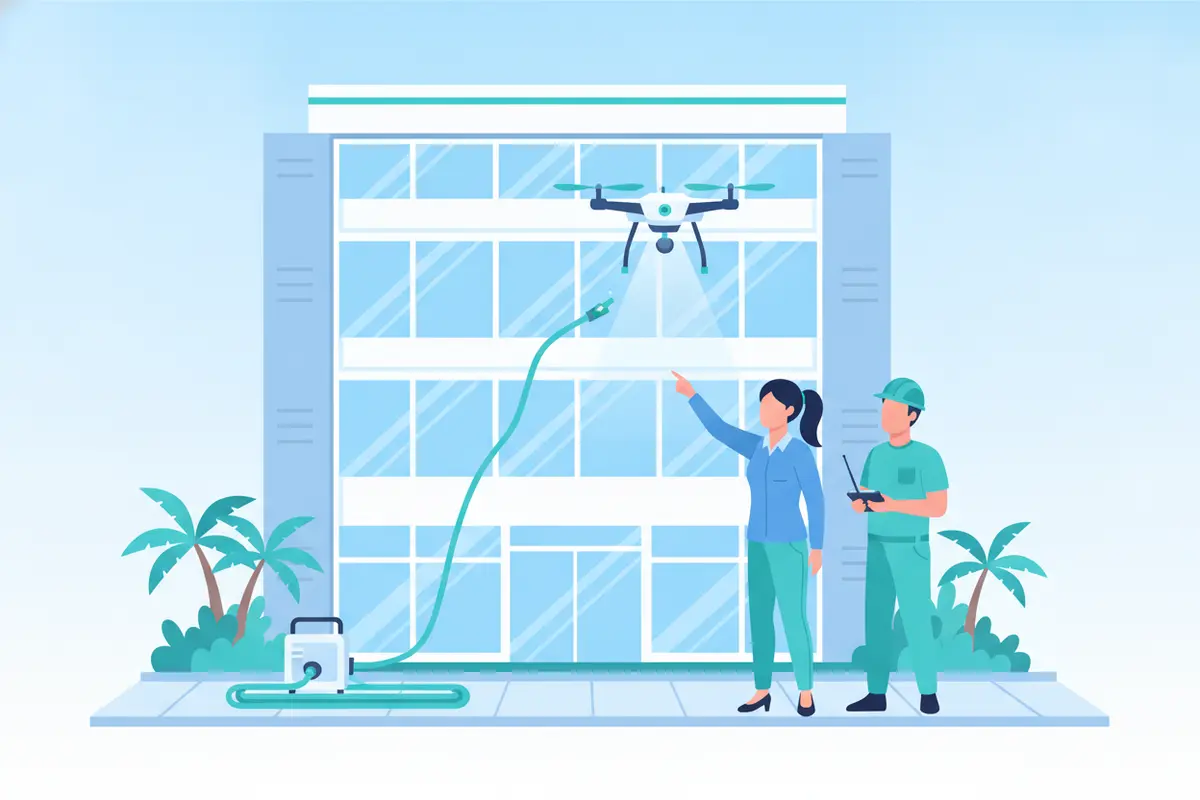
How should managers compare commercial window cleaning methods?
Compare methods against the same property conditions and desired result. Traditional methods may use ground access, water-fed poles, lifts, or scaffolding, depending on the building and the work. Drone services may be another option for suitable sites. None should be treated as automatically safer, less disruptive, or less expensive without examining the actual scope and controls. Skybots does not set a universal price; the work is assessed on site and quoted for the property.
Approach | May fit when | Questions for the scope |
Water-fed pole cleaning | Reach and building layout allow work from the ground or another suitable position. | Which elevations and panes are reachable? What water access and finish checks are planned? |
Lift or scaffold access | The job needs a stable access platform or a method suited to specific surfaces and conditions. | Where will equipment be positioned? What permits, closures, setup time, and pedestrian controls apply? |
Drone cleaning | The building meets the service’s height and access criteria, with suitable flight paths and work area. | Is the site suitable after inspection? How will water be supplied, the area managed, and results reviewed? |
Combined methods | Different elevations or details call for more than one method. | Which method is assigned to each area, and how will the provider coordinate the handoff? |
The table is a comparison framework, not a substitute for an inspection. Ask every provider to quote against the same list of elevations, window types, access assumptions, work hours, and completion criteria. If proposals differ, identify whether one includes more surfaces, setup, protection, or follow-up than another.
Consider two common decision patterns. A low-rise storefront with easy ground access may be well served by a conventional method, especially when the task includes close detailing around entrances. A multi-story building with open exterior access may merit a drone assessment if its height and operating conditions fit. A third property could need different methods on different elevations because of canopies or narrow passages. In each case, the useful question is not which method sounds most advanced, but which plan can reach the included areas, manage the work zone, and meet the stated finish criteria.
When reviewing options, ask the provider to explain any proposed trade-off. For example, a schedule may depend on access to a water connection, tenant notices, or an unobstructed work area. If a provider expects the property team to move furniture, close a walkway, or provide access to a service area, write down who handles it and when. Clear responsibilities reduce surprises on the service date and make it easier to determine whether a delay was caused by site readiness, weather, or a change in scope.
What should an inspection check before choosing a solution?
A useful inspection should result in a written understanding of the building and work plan. Property teams can prepare by gathering access details, identifying sensitive areas, and noting operating constraints. The provider can then evaluate the site and explain what is included, what is excluded, and what could change the approach.
- Map the surfaces.
Record the elevations, window types, frames, and any adjacent cladding or features in the requested scope. Note known coatings, repairs, or areas that need special handling.
- Describe the soil and desired finish.
Share whether the concern is routine buildup, salt, oily marks, construction residue, or a specific visible blemish. Do not assume all residue needs the same treatment.
- Review access and obstacles.
Identify balconies, canopies, landscaping, overhead lines, narrow passages, neighboring property boundaries, and areas where people regularly pass.
- Confirm water and site logistics.
Drone operations require on-site water access. For a hose-fed setup, ask how the water connection and hose route will be managed and kept clear of occupants. Skybots uses batteries for the drone; do not confuse a water hose with a power supply.
- Plan the work zone.
Agree on barriers, signs, restricted areas, staff coordination, vehicle or loading access, and how the site will remain usable while cleaning takes place.
- Set schedule and communication expectations.
Identify preferred work hours, notice periods, weather-related rescheduling procedures, the site contact, and how changes will be communicated.
- Define the closeout.
Agree how completed areas will be reviewed, how exceptions will be reported, and who can raise a concern during the follow-up period.
Safety planning is a core part of exterior work, whatever method is selected. California’s window-cleaning regulation is specific to California and does not set the rules for a South Florida property, but it illustrates why a documented work plan matters: California’s general window-cleaning requirements address safety requirements for window-cleaning operations. For a Florida site, the provider and property team must determine the requirements that apply there and to the selected equipment and work.
How should the cleaning scope handle products, water, and finish?
Ask for enough detail to understand what is being applied and where. The right product depends on the surface, residue, and manufacturer or property restrictions. Confirm whether the scope uses plain water, a cleaning product, or different approaches for different areas; how product use is controlled; and whether the property has restrictions related to landscaping, runoff, nearby tenants, or sensitive finishes.
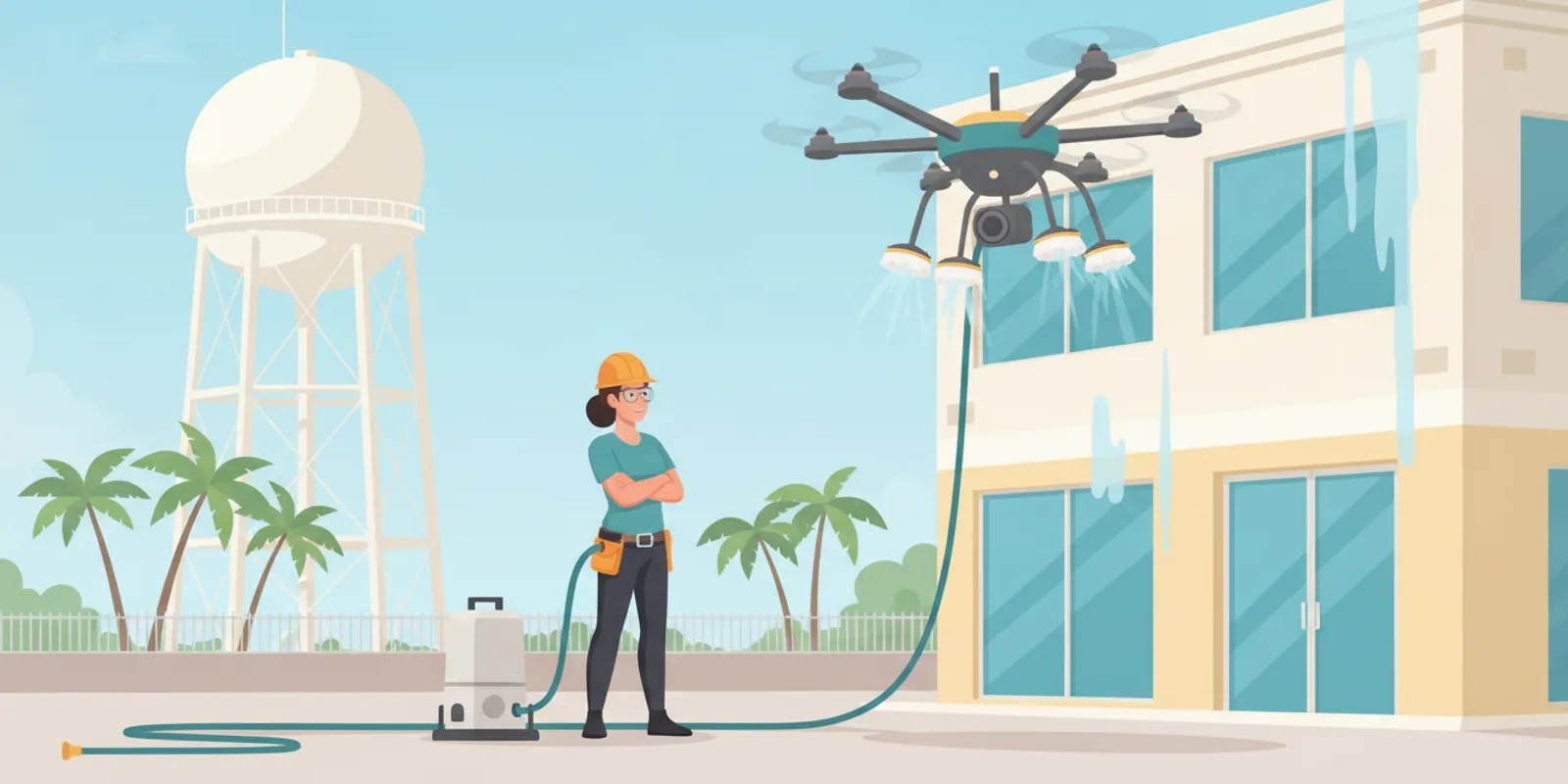
For water-fed drone work, the hose supplies water from the ground. It does not power the drone, which uses batteries. The inspection should account for the water source, hose path, connection, and the team’s plan for keeping the work area orderly. If the property has limited water access or a layout that makes hose routing impractical, raise that before a proposal is finalized.
Specify the expected finish with practical language. For example, list the elevations and window groups to be cleaned, identify excluded areas, and state how the team will report an obstruction or stain that remains after cleaning. Where the work includes touch-ups, clarify the applicable feedback window and process. Skybots provides a three-day feedback window with free touch-ups when applicable; it should be understood in that context, rather than assumed as a blanket promise for every condition or project.
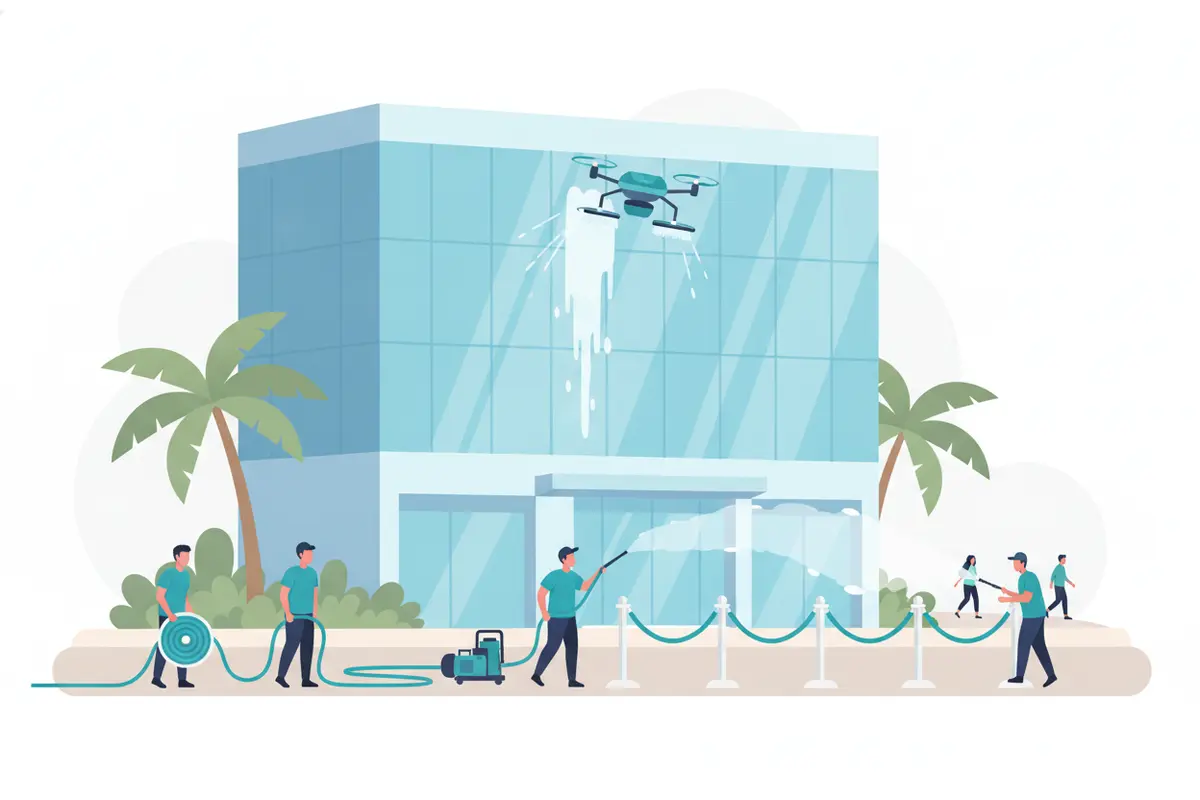
How can managers compare quotes and plan recurring work?
Pricing depends on the property and scope, so a universal per-window or per-floor price is not a reliable basis for choosing. Skybots determines pricing through an on-site inspection and custom quote. Compare the written quote for coverage and assumptions, not just the bottom line.
Check whether every elevation and requested surface appears in the quote.
Confirm the access method, water requirements, work-zone controls, and any site responsibilities.
Ask what is included in setup, cleanup, inspection, and reporting.
Look for exclusions, site conditions that may change the scope, and the process for approving additional work.
For recurring service, ask how the schedule, visit scope, and pricing are set and whether each visit can be adjusted after a property review.
Cleaning frequency should reflect the property’s exposure and appearance needs, rather than a one-size-fits-all calendar. Coastal conditions, nearby construction, traffic, landscaping, building use, and the visibility of the windows can all affect how quickly they look dirty. Start with the property’s current condition and desired standard, then review results over the first service interval. A provider can help propose a schedule, but the property team should decide based on observed conditions and budget.
Recurring service may make scheduling more predictable, but it does not automatically mean a lower price. Ask for pricing options for the agreed frequency and scope, and compare them with the cost and operational implications of one-time visits. A maintenance log can help: note service dates, elevations completed, observed issues, weather or access delays, and any feedback. This creates a useful basis for adjusting the plan instead of relying on memory.
For examples of service-area information, see Skybots’ Miami service page, Doral exterior cleaning, and Miami Beach drone cleaning. The portfolio also includes guidance on how often to professionally clean windows and how long pro-cleaned windows may stay clean. Local exposure and the service plan determine what applies to a particular building.
How do drone services fit into a responsible maintenance plan?
Drone services should be considered as one part of a managed maintenance process, not as equipment alone. A responsible plan combines the right method with a qualified team, clear site coordination, safety controls, a defined scope, and follow-up. That approach helps a property manager understand what is happening before the work begins and what to expect afterward.
For a candidate building, a practical next step is to request an inspection and prepare the information that makes it useful: building height, elevations, photos or drawings if available, water access, known obstacles, desired service window, and site-specific restrictions. The assessment can then confirm whether drone cleaning is suitable, whether another method or a combination is more appropriate, and what the custom quote covers. For a broader overview of Skybots’ approach, visit the company profile or review the guide to cleaning hard-to-reach windows.
Frequently Asked Questions
What affects the price of commercial window cleaning?
Price depends on the building, surfaces, access, soil, scope, and work conditions. Skybots uses an on-site inspection and custom quote rather than a universal rate. Ask for the same elevations and inclusions to be priced when comparing providers.
How long do professionally cleaned windows stay clean?
There is no fixed duration for every property. Coastal exposure, weather, nearby traffic or construction, and the window’s location affect how quickly residue returns. Track the appearance after service and use that experience to adjust the next visit.
How often should a commercial building schedule window cleaning?
Choose a frequency based on exposure, visibility, tenant or visitor expectations, and the property’s maintenance plan. A site assessment can help set an initial schedule, which the team can revise after observing how the windows look between visits.
Are recurring service schedules priced differently?
Ask the provider to quote the agreed scope and frequency. Recurring work can be planned in advance, but it is not automatically cheaper. Compare the visit scope, schedule flexibility, and any conditions that affect the price.
Can every commercial building use drone window cleaning?
No. Height, payload, flight paths, water access, obstacles, work-zone conditions, and the cleaning requirement all affect suitability. Skybots’ operating context is generally three stories and above, with an approximate upper suitability limit of 19 to 20 stories, subject to on-site assessment.
The best commercial window cleaning solution is the one that matches the property’s surfaces, access, operating needs, and finish expectations, with a written scope that the building team can verify.

Comments