

How Should a Property Manager Plan Commercial Graffiti Removal? A Pressure Washing Guide
Commercial graffiti removal is easiest to manage when the plan starts with the wall, not a promised technique. Before selecting pressure washing or another method, identify the surface, document the affected area, and confirm what result is practical. That gives your team a clearer scope, safer site plan, and quote based on the actual property.
What should a property manager document first?
Begin with a short record of the condition and the property context. This helps a cleaning provider assess the job and helps your team compare proposals on the same basis.
- Location:
Record the building, side, level, and exact area. Note whether the mark is beside an entrance, storefront, loading area, or pedestrian route.
- Extent:
Estimate the affected dimensions and note whether there are several marks or layers. Photos taken from a safe, accessible position help describe the scope.
- Surface:
Identify what you know about the material and finish, such as painted masonry, brick, concrete, metal, or glass. If you are unsure, say so rather than guessing.
- Condition:
Note peeling paint, cracks, loose mortar, previous repairs, coatings, or other visible issues near the affected area.
- Access:
Describe nearby doors, windows, landscaping, parked vehicles, electrical fixtures, signage, and areas used by tenants or customers.
- Timing:
Include access hours, business peaks, tenant requirements, and any deadline tied to an event or inspection.
Photograph the area in context and close up, but do not enter restricted spaces or climb to get a better view. Keep the images in the maintenance record with the date and location. The NIH Office of Logistics and Acquisition Operations describes planning and performing property-management site visits as part of its contractor property oversight; it is not graffiti-cleaning guidance, but it is a useful example of why site conditions and visit records belong in a property plan. See its contract property management information.
If the mark appears to be on a historic surface, a specialty coating, or a fragile finish, flag that early. The right removal process can depend on the substrate and on previous treatments. Do not assume that a method that worked on one wall will be appropriate on another.
It also helps to separate the immediate cleanup decision from the broader maintenance decision. If graffiti appears repeatedly in the same location, record each occurrence and consider whether lighting, access control, or a faster reporting process belongs in the property team’s response plan. These measures do not replace removal, but they can help staff respond consistently. Keep the record factual: note dates and locations rather than making assumptions about who caused the damage.
How does pressure washing fit commercial graffiti removal?
Pressure washing uses water delivered under pressure to clean suitable exterior surfaces. It may be considered for some robust masonry or concrete, depending on the surface condition, the type of marking, and the cleaning plan. It is not a universal graffiti remover. Excessive force or an unsuitable setup can affect paint, mortar, sealants, nearby openings, or other finishes.
Ask the provider to explain why a proposed method fits the actual wall. That explanation should account for the substrate, the surrounding property, the access arrangement, and how the team will manage runoff or protect nearby areas. A surface test in a discreet location may be appropriate when the provider recommends it and the property owner authorizes it.
Pressure washing should not be treated as interchangeable with soft washing or other exterior-cleaning approaches. A lower-pressure approach may be more appropriate for some materials or finishes, while other surfaces may require a different specialist process. The assessment should identify the method and its limits before work begins.
Ask what the test is meant to establish before agreeing to one. For example, the provider may be checking whether the marking responds to the proposed treatment or how the finish looks after a small area is cleaned. Agree on where the test can occur, who will review it, and whether the test area is included in the quoted work. A test can inform the decision, but it does not guarantee that every part of a larger wall will respond exactly the same way.
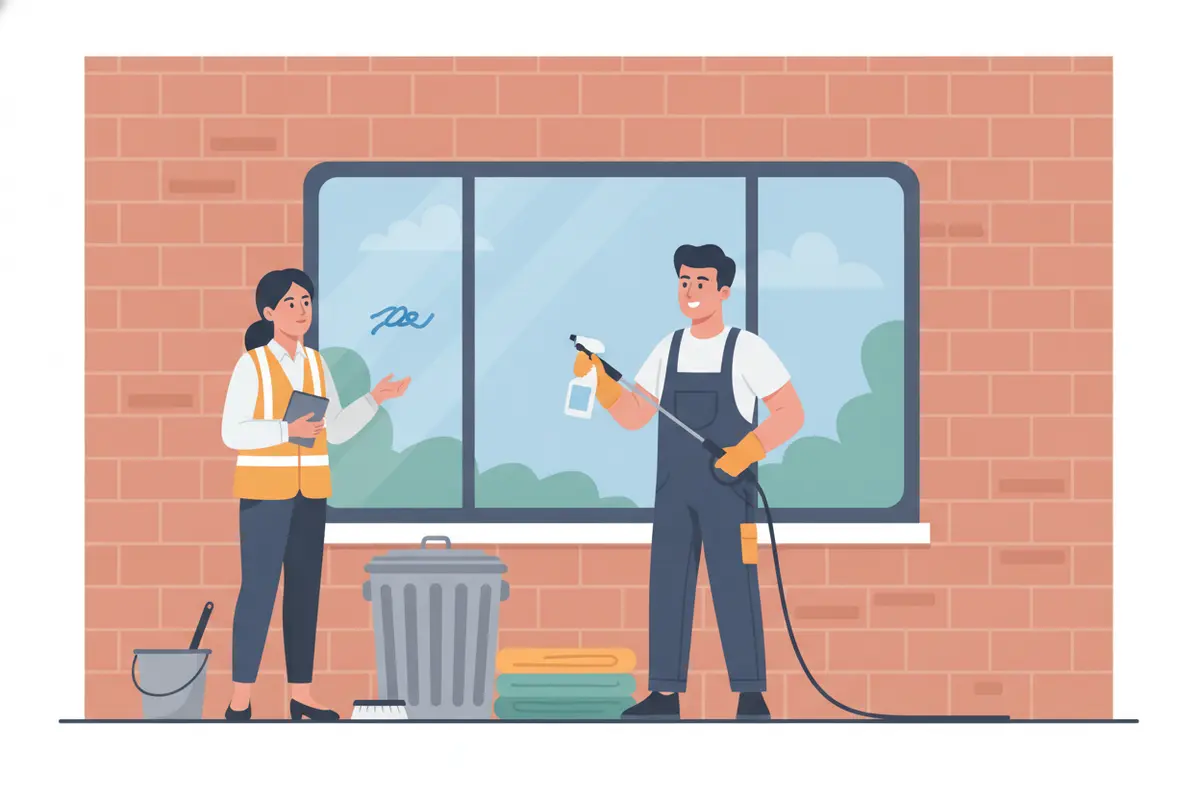
For an overview of the exterior cleaning services and methods Skybots describes, review its commercial cleaning services. The appropriate fit for graffiti removal still needs to be confirmed for the specific surface and scope. Skybots uses an inspection and custom quote process, rather than a universal price for every property.
Which method and safeguards should the scope specify?
A useful scope does more than say “remove graffiti.” It records the affected area, the proposed approach, what the provider will protect, and what completion will look like. Ask for clear answers to the following before approving the work:
- Surface and method:
What material is being cleaned, what method is proposed, and why is it suitable for that material and condition?
- Test and limits:
Is a small test area recommended? Could a shadow, color variation, or change in finish remain after removal? What outcomes cannot be promised?
- Protection:
How will doors, windows, landscaping, signs, nearby vehicles, and pedestrian areas be protected?
- Water and site controls:
Where will water be accessed, and how will water and loosened material be managed? Ask the provider to explain the plan for the particular site and applicable requirements.
- Access and safety:
What access equipment or work area controls are required? Who will coordinate closures or keep occupants clear of the work area?
- Completion:
What will the provider inspect, how will the result be documented, and who should receive the closeout record?
If the affected coating is already loose or the wall is visibly damaged, make that a decision point rather than treating it as a routine cleaning detail. Ask whether cleaning should pause until the owner or a suitable specialist reviews the condition. Clarify who can approve a change if the test reveals a risk or a different surface than expected. This prevents a field decision from silently expanding the job or changing the desired finish.
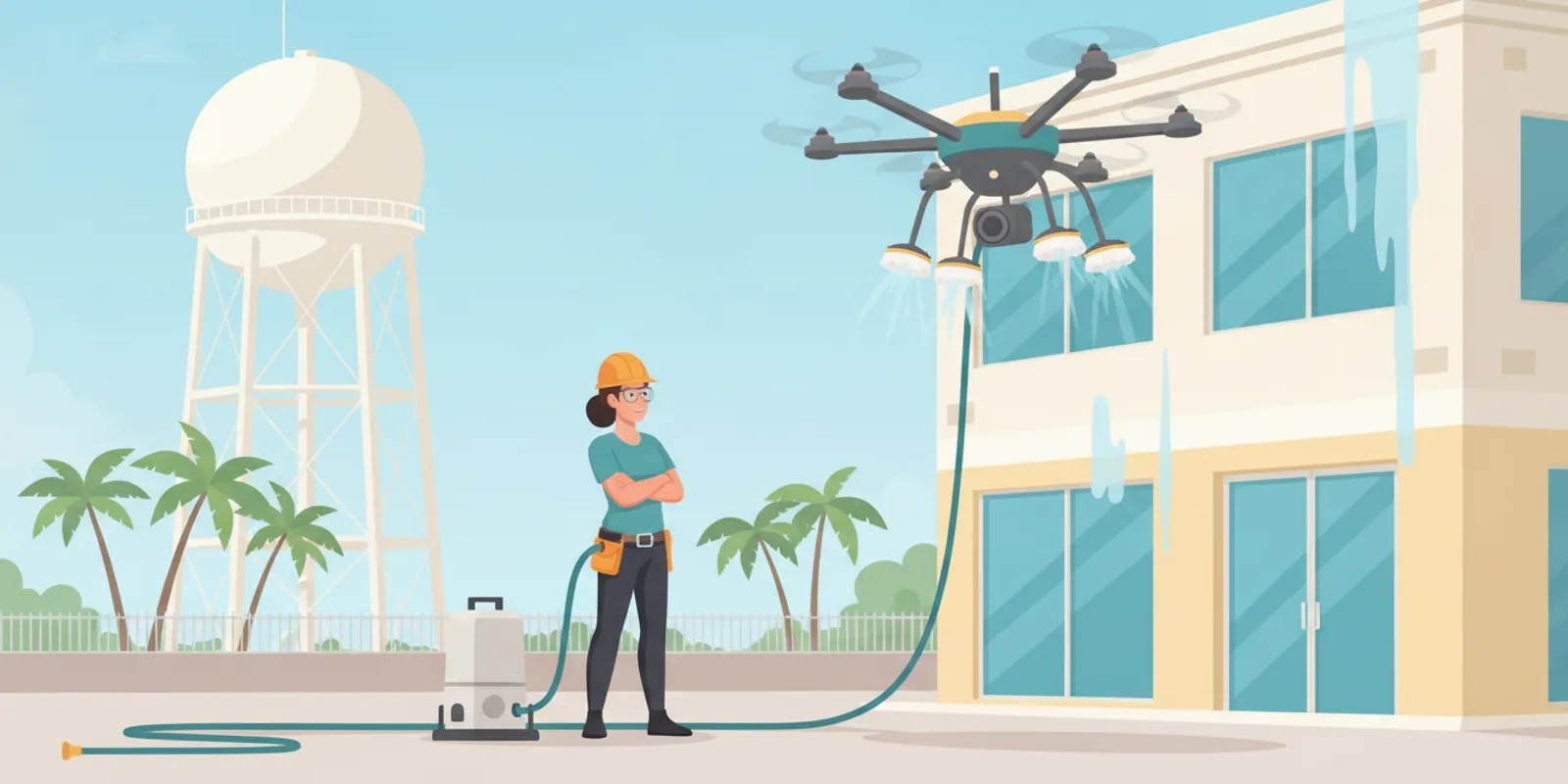
Do not assume one access method is right for every building. The property layout, height, surface, and work zone inform the plan. Skybots describes drone cleaning for suitable buildings and sites, but the company’s operating context includes a three-story minimum and an approximate 19 to 20 story upper limit for suitability. A site review should establish whether that approach applies or whether another method or provider is needed. Learn more about how the cleaning process works.
For work that may involve pressure washing, clarify how water will be supplied. Skybots states that on-site water access is required for its operations. Do not assume the cleaning equipment can use a building’s supply without coordination; identify the approved connection and access arrangements with the property team in advance.
How should pressure washing proposals be compared?
Compare proposals by scope and assumptions, not by the headline price alone. One quote may include only the visible mark, while another may include adjacent areas, protection, access, cleanup, and a follow-up inspection. Ask each provider to clarify the same points so the comparison is fair.
Proposal item | What to confirm | Why it matters |
Area and surface | Exact location, estimated dimensions, material, and known finish | Prevents mismatched scopes and assumptions about the wall |
Cleaning method | Method, reason for fit, test recommendation, and limitations | Helps assess suitability and expectations for the finish |
Site preparation | Protection, access, water arrangements, and work-zone controls | Makes tenant and operations coordination actionable |
Price basis | Included work, exclusions, conditions that could change the quote | Clarifies what the quoted amount actually covers |
Closeout | Inspection, photos or other record, and process for raising concerns | Creates a usable maintenance record after the work |
For Skybots, pricing is set after an on-site inspection and custom quote. Ask what the quote includes and whether any site condition could change the scope. Avoid comparing a custom, inspection-based proposal with a broad estimate unless the work included is genuinely the same.
Also confirm how the provider communicates if the initial method does not achieve the expected result. Graffiti may leave a residual shadow or reveal an underlying surface difference. A careful proposal explains this possibility and identifies what decisions would require approval before additional work.
Include a clear comparison of the possible alternatives when the inspection indicates that cleaning may not deliver the finish the owner expects. Depending on the surface and condition, the discussion may include a specialist treatment or repainting, but those are not interchangeable scopes. Ask the provider to state what is included in its proposal and what would require another trade or a separate quote. This lets the decision-maker compare the expected appearance and responsibility, not simply the amount due on the first invoice.
How can managers coordinate the work with daily operations?
Once the scope is approved, name one property contact to coordinate access and updates. Give that person the work schedule, provider contact, site map or marked-up photos, and the agreed scope. Notify affected tenants or occupants using the property’s normal communication process.
Before work starts, confirm the arrival window, water access, vehicle or equipment staging, and any temporary restrictions. For a retail or office property, consider entrances, deliveries, customer traffic, and times when the area is busiest. Place or arrange any required notices and barriers through the responsible site team. Do not rely on a provider arriving to resolve building access decisions at the last minute.
During the job, keep communication simple. The provider should know who can approve a change in scope, and the property contact should know how progress or an unexpected condition will be reported. If the team finds a surface issue that differs from the inspection, pause for clarification rather than letting the work expand without approval.
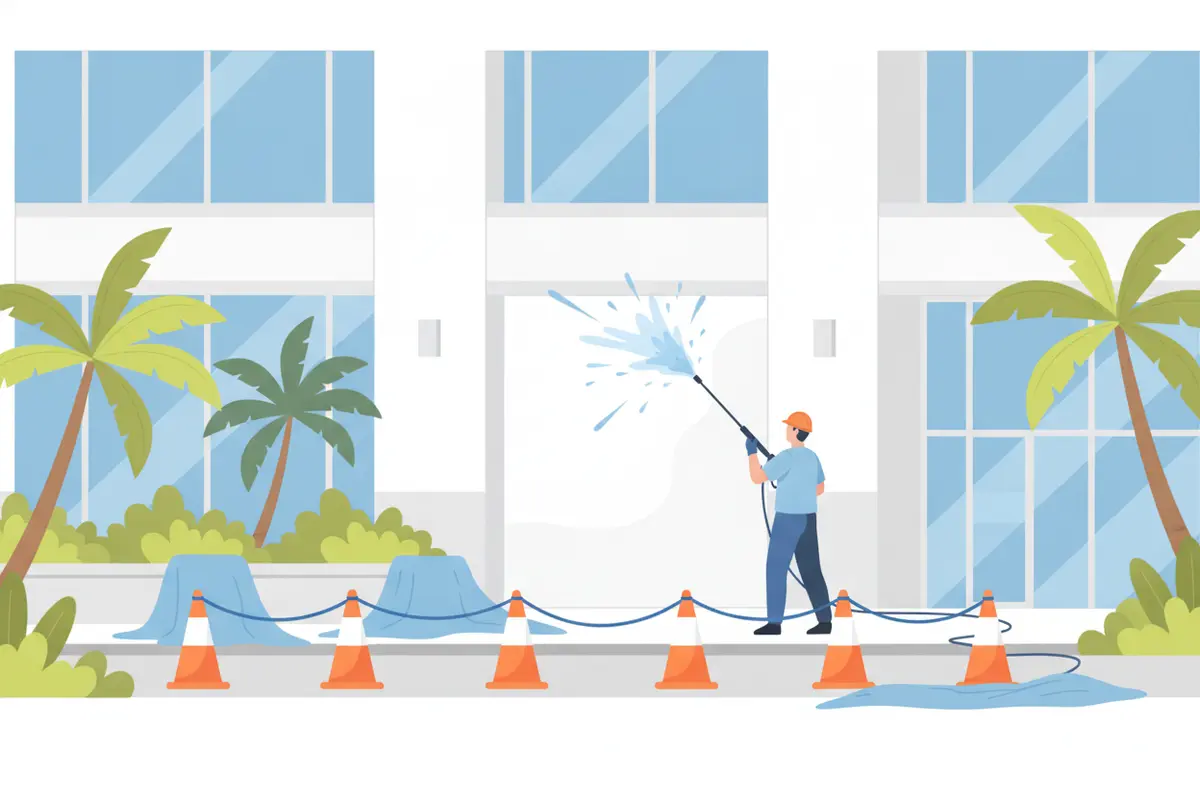
For multi-property teams, use a consistent record for each site: location, surface, before-and-after condition, approved method, access notes, and any follow-up action. This makes future maintenance planning more reliable and helps staff understand what was done without depending on one person’s memory.
A short pre-work check can make the handoff more dependable. Confirm that the property contact is reachable, the work area can be accessed, the agreed water connection is available if needed, and occupants know where to go during any temporary restriction. If one of these items is not ready, update the provider before the scheduled arrival and agree on the next step. That is usually clearer than starting with a partial setup and renegotiating the work while it is underway.
Managers in Miami-Dade, Broward, and Palm Beach can review the available Miami-Dade exterior cleaning coverage, Broward service area, and Miami cleaning information when considering an assessment. Service fit still depends on the property and the requested work.
What should managers check after commercial graffiti removal?
Inspect the result from a normal viewing distance and, where useful, from closer range. Compare it with the original photos and the outcome agreed in the scope. Check that the affected area has been addressed, adjacent surfaces and fixtures appear undamaged, and the work zone has been left in the agreed condition.
Record what remains, if anything. A faint shadow or difference in color may be visible even when the marking itself has been removed, particularly where the wall finish has weathered unevenly. Ask the provider to explain any remaining mark and whether further treatment is appropriate. Do not authorize additional work until its method, risks, and price are clear.
For Skybots work, the company describes a three-day feedback window with free touch-ups when applicable. Confirm how that applies to the specific project and what the agreed scope covers. Keep the quote, site notes, photos, and closeout communication together in the property record.
Frequently Asked Questions
Can pressure washing remove graffiti from every commercial wall?
No. Suitability depends on the surface, finish, condition, and marking. Ask for an inspection and a clear explanation of the proposed method and its limitations before approving work.
How much does commercial graffiti removal cost?
There is no reliable universal price because area, surface, access, protection, and method can vary. Skybots sets pricing through an on-site inspection and custom quote. Request an itemized scope so you can compare proposals fairly.
Can a cleaning provider guarantee that no shadow will remain?
Do not assume that every mark can be removed without a trace. Weathering, paint, and the underlying material can affect the final appearance. Ask what outcome is realistic for the wall and how the provider will handle any remaining discoloration.
How long will a cleaned wall stay free of graffiti?
Cleaning removes existing marks but cannot predict when or whether new graffiti will appear. Exposure, site conditions, and future incidents vary. Record the completion date and condition, then use your property’s reporting process to document any new marks promptly.
How often should a commercial property schedule graffiti removal, and can it be recurring?
There is no universal schedule for graffiti removal. Set a response approach based on the property’s observed needs and operating priorities, rather than assuming every building needs the same interval. If you are considering a recurring exterior-cleaning schedule, ask Skybots what options fit the property; pricing is based on an on-site inspection and custom quote, not a universal rate.
What should I do if the graffiti returns?
Document the new condition and contact the provider if it relates to recent work or a stated feedback period. For repeated incidents, record locations and timing so your team can consider a response plan that fits site operations.
Plan an inspection before approving the scope
A dependable commercial graffiti removal plan connects the condition of the wall to a suitable method, a defined work area, clear site controls, and an agreed closeout. Start with the details your team can document, then ask a qualified provider to assess the surface and explain what the proposed work can and cannot accomplish. If the property may suit Skybots’ services, contact the team to discuss an inspection and custom quote.


Comments