

Property Maintenance Services: What Factors Affect Water Tank Cleaning Cost?
Water tank cleaning cost depends on the tank, the site, and the work needed to complete the job safely and thoroughly. For property maintenance services, a useful quote starts with an inspection of access, condition, cleaning scope, water availability, and operational constraints. There is no single rate for every property, so use the factors below to prepare a clear scope and compare proposals fairly.
How do property maintenance services shape water tank cleaning cost?
Tank cleaning is not one uniform task. A small, accessible tank with straightforward exterior buildup presents a different scope from a larger structure with difficult access, sensitive surroundings, or multiple surfaces. The quote should explain what is included and what site conditions may affect the work.
For a commercial property, first identify the purpose of the work. Are you removing exterior dirt and staining, cleaning a visible tank surface, or planning a broader maintenance task? Make sure the requested service matches the surface and condition. Interior tank cleaning, water treatment, inspection, or disinfection should not be assumed to be part of an exterior cleaning quote unless the provider specifically confirms it.
It also helps to distinguish a one-time project from a planned maintenance cycle. A one-time cleaning may need additional assessment because the history and condition are less familiar. A recurring schedule can make future scopes easier to plan, but the timing and pricing still depend on the property and agreed tasks. Ask whether a proposal covers one visit or a sequence of visits, and record any assumptions about access or the condition expected at each visit.
Which site conditions affect water tank cleaning cost?
Tank size, shape, and surface
Overall dimensions influence the area that must be reached and cleaned. Curved walls, seams, braces, ladders, and attached equipment can add detail. Surface material and finish matter too. A scope should identify the surfaces involved and use a method appropriate for them, rather than treating every tank as identical. If the coating is unfamiliar, share its documentation when available and ask how the proposed method accounts for it.
Two tanks with similar height can still require different plans. A tank with a broad, unobstructed wall is not the same task as one with multiple fittings, platforms, or transitions between materials. A facilities team can help by noting the approximate dimensions and visible features, then asking the provider to confirm those details during the site review. The objective is to give the quote enough detail to describe the actual work, not to calculate a final price from dimensions alone.
Access and working space
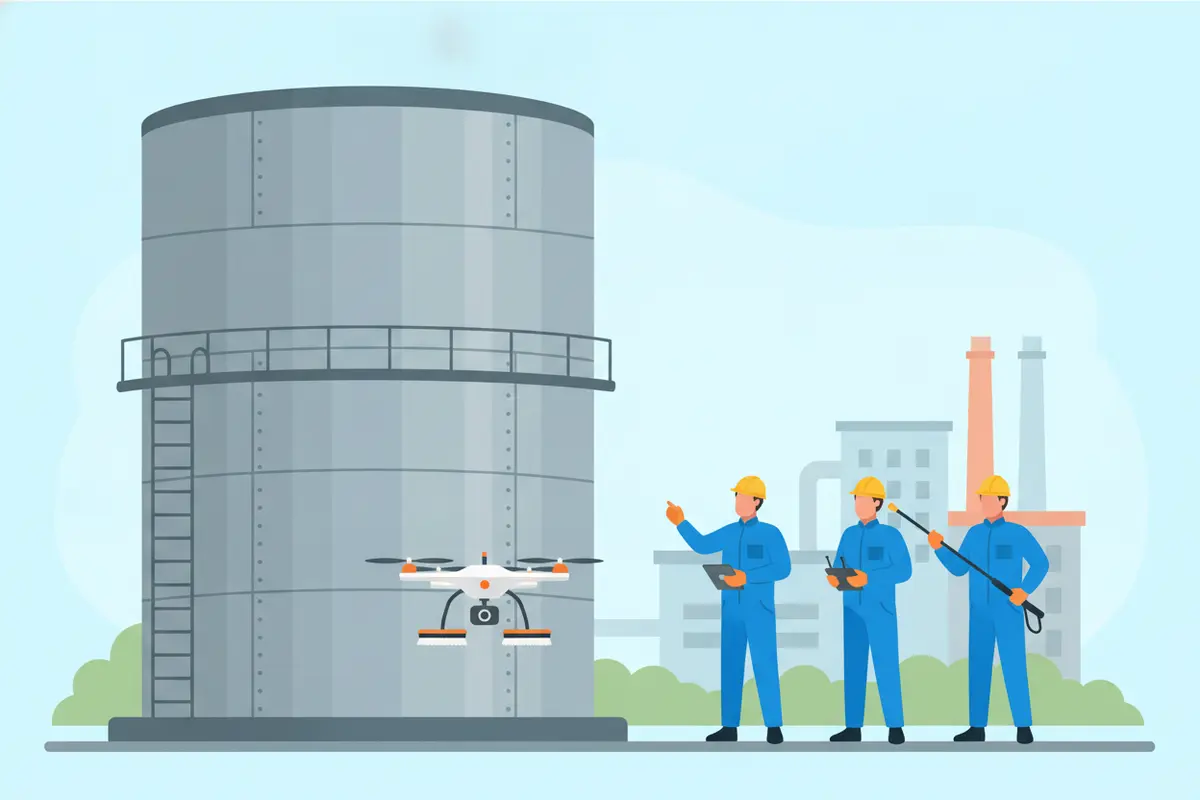
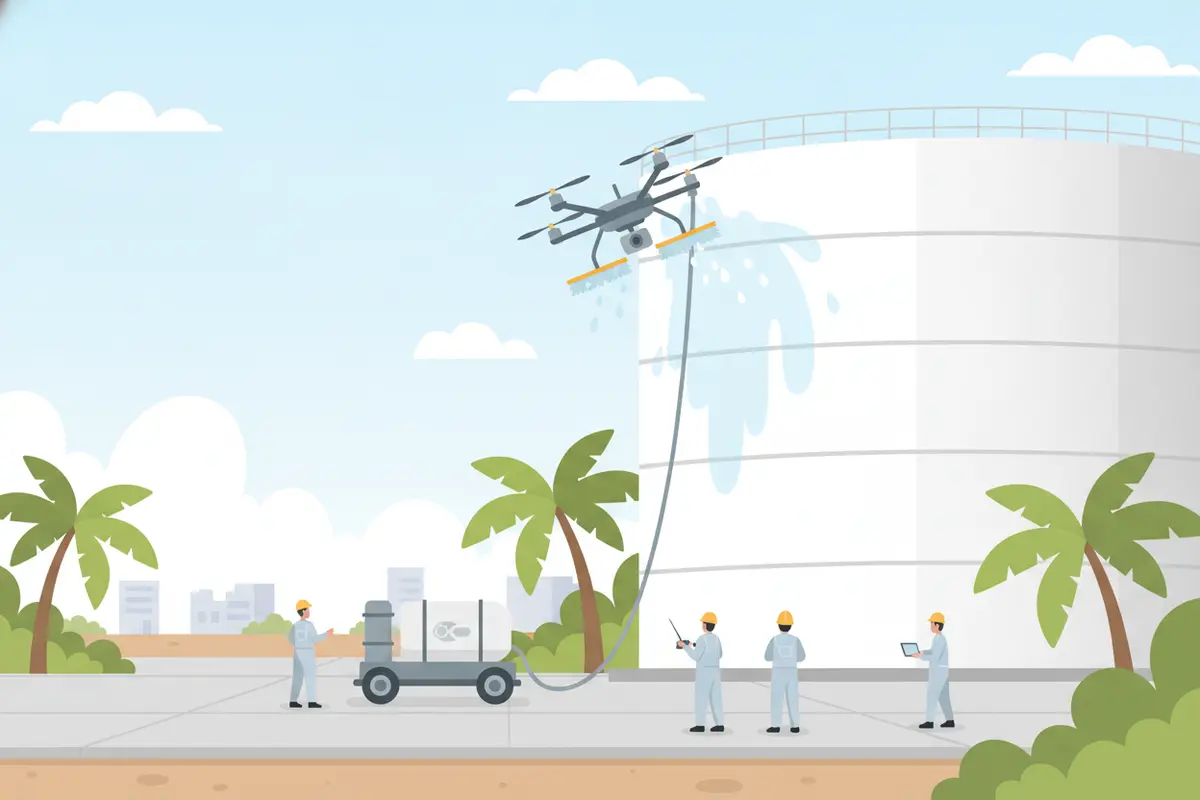
Access affects equipment setup and how a team can reach the work area. Note gates, restricted vehicle access, nearby structures, overhead obstructions, landscaping, and the space around the tank. A drone-based method may suit some accessible exterior tasks, while others may call for a different approach or additional equipment. Skybots evaluates suitability during planning rather than assuming every tank can be served the same way.
For drone cleaning, the operating environment must allow a suitable flight path and open access. Skybots also needs on-site water access. Its operating context includes a three-story minimum and an approximate 19-20-story upper limit for suitability; tank dimensions and site conditions still need individual review. See how the cleaning process works for an overview.
Access notes should be practical. Indicate whether the route is shared with deliveries, if a gate requires staff coordination, and whether vehicles or pedestrians move through the setup area. If there are work-hour restrictions, include them before a visit is scheduled. These details help the provider judge whether the proposed equipment and plan can be used without creating avoidable interruptions to normal site activity.
Condition and type of buildup
Loose dust, routine grime, and established staining can require different preparation and effort. A quote should account for observed condition and identify limitations, such as staining that may remain with the selected method. If the tank has peeling coatings, corrosion, damage, or unknown surface treatments, flag these before work is planned. Cleaning should not be treated as repair or coating restoration unless that work is explicitly included.
How do property maintenance services handle requested scope?
A precise scope prevents mismatched quotes. Specify whether the work concerns the exterior only, which faces or components are included, and whether nearby surfaces are part of the request. If the property has more than one tank, list each separately with approximate dimensions and access notes.
- Cleaning area:
identify exterior surfaces and excluded components.
- Method:
ask which cleaning approach is proposed and why it suits the surface.
- Preparation:
note whether the site needs barriers, access coordination, or protection for adjacent areas.
- Completion expectations:
clarify how the result will be reviewed and how concerns should be reported.
Skybots provides a three-day feedback window with free touch-ups when applicable. Confirm the terms for the specific project in the proposal; this is not a blanket promise for every condition or scope.
Before a visit, make a simple inventory rather than relying on memory during a walkthrough. For each tank, record its location on the property, approximate height and width, the side or sides of concern, visible attachments, and the main reason for requesting cleaning. If the property has several tanks, use a separate note or photo set for each. That prevents a quote from accidentally treating several different structures as one identical task.
Decide what the site team needs to know about the finished work. For example, identify whether the priority is a particular visible face, the full exterior, or an area near an entrance or shared space. Do not assume that equipment, ladders, the tank top, or nearby piping are included. Ask that inclusions and exclusions be stated in plain language so the operations team can verify the scope before it is approved.
What should a water tank cleaning quote include?
Compare the work described, not only the total. A clear proposal should show what the provider inspected, what method is planned, and which assumptions could change the scope. Ask for clarification if several tasks are combined into a vague line.
Quote factor | What to check | Why it matters |
Tank and surfaces | Dimensions, material, exterior areas included | Defines the amount and type of work |
Access and setup | Site access, flight path or other equipment needs, water availability | Determines practical methods and preparation |
Condition | Observed buildup, staining, surface concerns | Helps set realistic cleaning expectations |
Operations | Scheduling limits, vehicle or pedestrian activity, site contact | Supports safe coordination and less disruption |
Deliverables | Included areas, exclusions, review process | Makes proposals easier to compare |
Before approving, confirm whether the amount is based on an inspection or preliminary information, what happens if conditions differ from what was described, and whether additional work requires approval. Custom pricing follows an on-site inspection and quote rather than a universal rate. A written scope also gives the property team a reference if the site conditions or requested work change later.
Ask how the provider will handle a change in scope. If an inspection reveals a surface concern or access constraint that was not visible in the initial information, the property contact should understand whether work pauses for discussion, whether a revised proposal is needed, and who can authorize it. Agreeing on this process in advance is more useful than trying to resolve an unclear change while work is underway.
How can property teams prepare for an inspection?
Preparation makes the assessment more useful. Gather the tank location, approximate size, surface material if known, photos from accessible viewpoints, and the reason for cleaning. Describe known coating issues, access restrictions, site hours, and nearby sensitive equipment. Do not climb or enter a tank to gather information.
Identify the tank and exterior surfaces you want cleaned.
Share safe ground-level photos and known dimensions.
Explain operational limits, such as restricted hours or active work areas.
Ask the provider to inspect access, water availability, and the proposed cleaning method.
Review the written scope and exclusions before scheduling.
For tanks or other industrial structures, review Skybots' commercial cleaning services and discuss the actual site rather than assuming a method is suitable. Property teams can also review Miami-Dade exterior cleaning information or Broward service coverage. For a local project, these pages can help you start the conversation, but an individual assessment still determines fit.
Photos can make an initial discussion more efficient, but they are not a substitute for an assessment where access, height, or surface condition needs verification. Take pictures only from a safe, permitted location. A useful set includes a wide view showing the tank in context, a closer view of visible buildup, and any obvious obstructions around the approach area. Labeling which tank each photo shows can help avoid confusion on multi-tank sites.
How do you compare proposals fairly?
Use the same information and scope when requesting proposals. If one provider prices only an accessible tank wall while another includes more surfaces or more preparation, the totals are not direct comparisons. Ask each provider to state its approach, access assumptions, preparation, exclusions, and how the finished work will be reviewed.
Also consider how the work fits the site's maintenance plan. A suitable method needs to match the tank surface, access conditions, and operational needs. The lowest initial figure may not represent the same work, and a higher quote is not automatically better. Clarity and fit are more useful than a price comparison without scope.
When comparing methods, ask what will happen around active operations, where equipment will be staged, and whether access to the work area needs to be restricted. Clarify who will coordinate with building staff and what notice tenants or site users may need. These details do not necessarily change the cleaning itself, but they help reveal whether the proposed plan fits the property.
A practical comparison worksheet can use one column per proposal and the same rows for every provider: surfaces included, proposed method, preparation, water and access assumptions, scheduling constraints, exclusions, change approval process, and review arrangements. Mark unanswered items rather than filling gaps with assumptions. Then request clarification on those points. This turns a price discussion into a comparison of defined work and makes it easier to explain the decision to owners or procurement teams.
When should a property team request an assessment?
Request an assessment when exterior buildup is visible, when the tank is part of a planned maintenance cycle, or before a property activity that calls for a clean and presentable site. If you are unsure whether drone cleaning is suitable, share the tank's approximate height, access details, and photos so the provider can review conditions. For projects outside a drone's practical operating environment, another method may be more appropriate.
Skybots works with residential, commercial, and industrial properties in South Florida, using a structured process that brings together equipment, skilled operators, and site planning. Learn more about Skybots and its approach, or read how drones clean storage tanks. For more background on the maintenance process, see the latest Skybots guidance.
When you request a quote, include a preferred timing window and any deadlines tied to inspections, tenant activity, or other site work. If the tank is one part of a larger maintenance project, explain the sequence so the provider can consider access and coordination. The goal is not to over-specify before an assessment, but to give enough context for a practical plan and a proposal that addresses the real task.
For a basic comparison, make a short record of the same details for each proposal: tank dimensions, visible condition, surfaces requested, access notes, water availability, and work hours. Then compare the written exclusions and method alongside the amount. If a proposal leaves an important point unclear, ask before approval rather than relying on assumptions that may not match the site.
Skybots' structured approach combines specialized equipment and skilled operators with planning and communication. Property teams can learn about Skybots' exterior cleaning services and Doral service information; coverage pages are useful starting points, while the inspection establishes project details.
It can also help to decide who owns each step on the property side. One person may gather dimensions and photos, while an operations contact confirms access and a decision-maker reviews the proposal. Share the same scope notes with everyone involved. This reduces the chance that a quote is approved before staff have checked site access, or that an important exclusion is missed during scheduling.
Frequently Asked Questions
Can I get a fixed price per tank?
Not reliably without knowing the tank, condition, access, and scope. Skybots determines pricing through an on-site inspection and a custom quote.
Does a tank cleaning quote include interior cleaning?
Not unless the proposal specifically says so. This article concerns exterior cleaning; confirm any interior cleaning, water treatment, or disinfection requirements directly with a qualified provider.
Does every water tank suit drone cleaning?
No. Suitability depends on the tank, its height and surfaces, available water, open access, and a clear flight path. A site review helps determine whether the method is appropriate.
What information should I share to get an accurate quote?
Provide the tank's location, approximate dimensions and height, surface information if known, photos from safe viewpoints, visible condition, access limitations, and the surfaces you want included.
Plan an inspection for your tank
A clear assessment can turn a broad request into a practical scope with appropriate expectations. Share the site's conditions and ask for a written quote that explains the work, method, and exclusions before scheduling.
For authoritative safety planning, consult the FAA's information on drone operations at FAA Unmanned Aircraft Systems; site-specific operating requirements should be confirmed for the planned work.



Comments