

What Should West Palm Beach Owners Ask About Exterior Cleaning? West Palm Beach Commercial Exterior Cleaning
Before you approve west palm beach commercial exterior cleaning, ask how the provider will define the work, select methods for each surface, manage access, and confirm completion. A useful plan starts with the building itself, not a one-size-fits-all service description. These questions help owners and managers compare proposals and set expectations before work begins.
What should West Palm Beach commercial exterior cleaning include?
Start by asking for a written scope tied to the property. “Clean the exterior” can mean windows, facade sections, exterior walkways, roof areas, canopies, or other surfaces. Different materials and conditions may require different methods, so a proposal should say what is included and what is not.
Ask the provider to identify the areas by elevation or zone. For a multi-building property, clarify which structures are covered. For one building, clarify whether the scope includes all sides, upper floors, entry areas, and difficult-to-reach sections. This makes it easier to compare bids and reduces confusion on the service day.
Which surfaces and elevations are included?
Are interior windows, screens, frames, or detailing excluded?
Are stains, mineral deposits, oxidation, or biological growth included in the quoted work?
What conditions could require a different method or separate approval?
How will the team document areas that cannot be cleaned as planned?
Ask for an inspection before the final scope and price are set. Skybots determines pricing through an on-site inspection and a custom quote, rather than a universal rate. The inspection gives the provider a chance to review access, surface condition, water availability, and the work area before recommending an approach.
How should a provider inspect a West Palm Beach property?
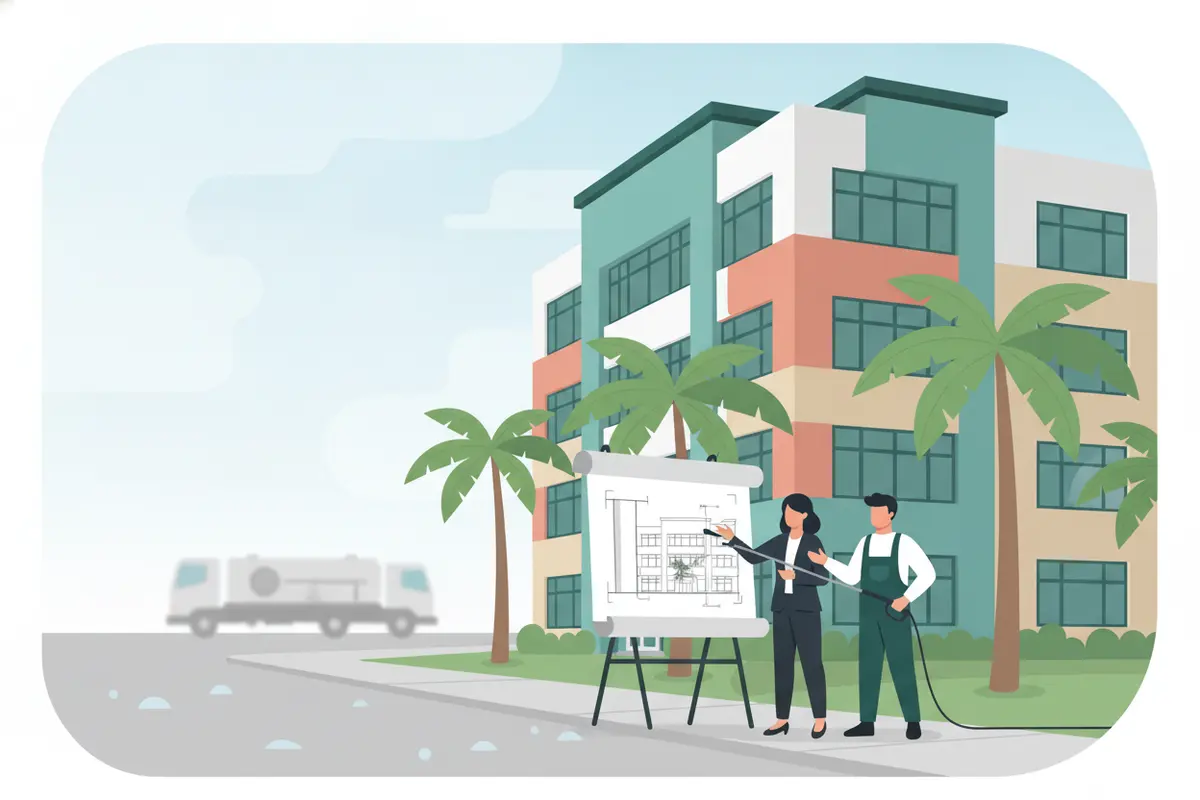
An inspection should turn general concerns into a practical work plan. Ask what the team will review and what information they need from you. Share building plans or prior maintenance notes if available, along with known surface sensitivities, recurring problem areas, and any restrictions on work hours.
The walk-through should consider the building’s height, shape, surrounding space, nearby public areas, surface types, water access, and obstacles around the work zone. For drone cleaning, Skybots’ operating context generally calls for buildings at least three stories tall, with suitability up to approximately 19 to 20 stories. That is an approximate operating range, not an automatic fit. Specific building conditions and safe access still matter.
West Palm Beach property owners can also use the Palm Beach County Property Appraiser’s Office for public property information. Property records do not replace a site inspection, but accurate property details can help a manager organize building information before discussing a project.
Ask the provider to explain what the inspection confirms and what remains subject to review. A useful assessment should record the proposed work areas, method assumptions, water source, access constraints, and any questions that need an owner or facilities team decision.
Which methods fit the building’s surfaces and access?
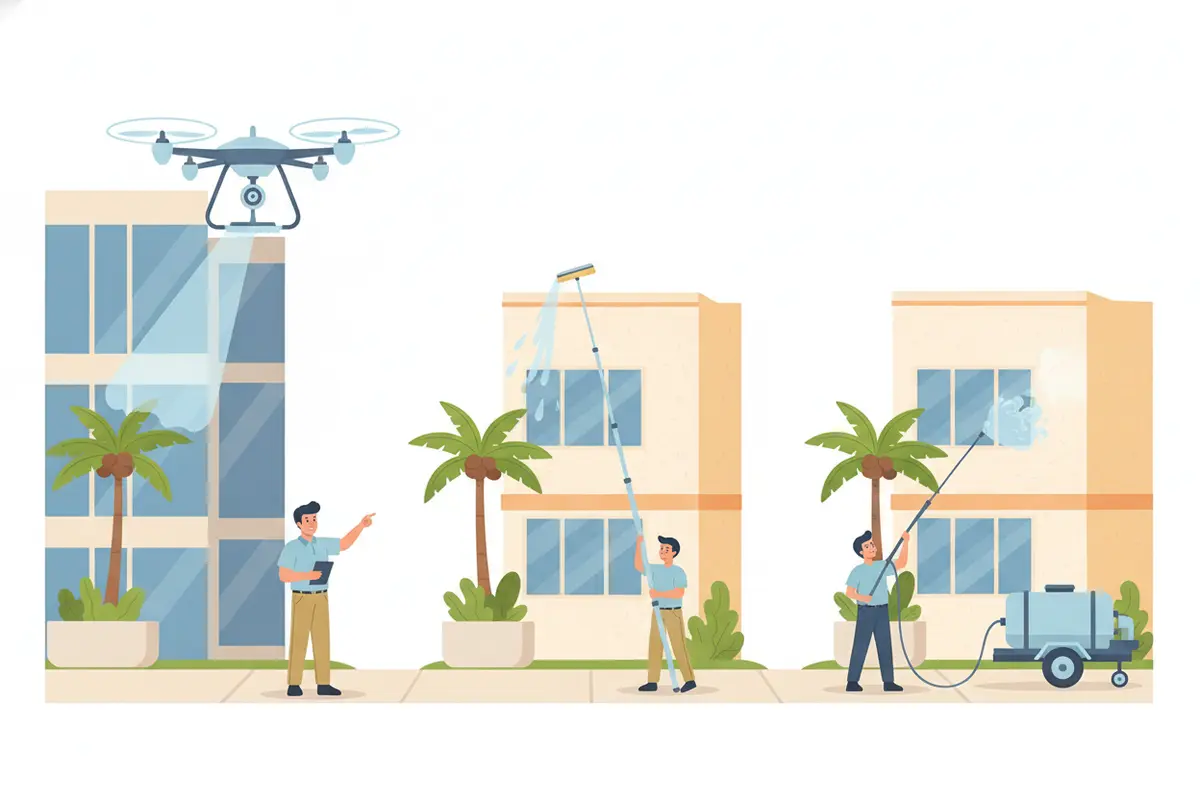
Ask why each method is suitable for the surface in question. Commercial pressure washing, soft washing, water-fed pole window cleaning, and drone cleaning serve different purposes. The right choice depends on the material, type of soil, height, access, and the property’s operating needs. A provider should explain the method in plain language rather than simply name equipment.
Method | Where it may fit | Questions to ask |
Drone cleaning | Suitable exterior windows or surfaces on qualifying multi-story structures with workable flight paths | Is the building within the operating range? Are flight paths clear? Is on-site water available? |
Water-fed pole window cleaning | Accessible windows where pole reach and site layout allow practical work | Which windows can be reached from the ground, and what will be used for the remaining areas? |
Soft washing | Appropriate exterior surfaces that call for a lower-pressure cleaning approach | Is the surface compatible, and how will the application and rinse be managed? |
Commercial pressure washing | Selected hard surfaces and other areas suited to pressure washing | What pressure and technique suit the surface, and how will nearby areas be protected? |
A professional plan may use more than one method across a property. Ask the provider to explain where each one begins and ends, how transitions will be managed, and whether the work could affect adjacent materials, landscaping, entrances, or pedestrian routes. Avoid assuming that a single method is right for every elevation.
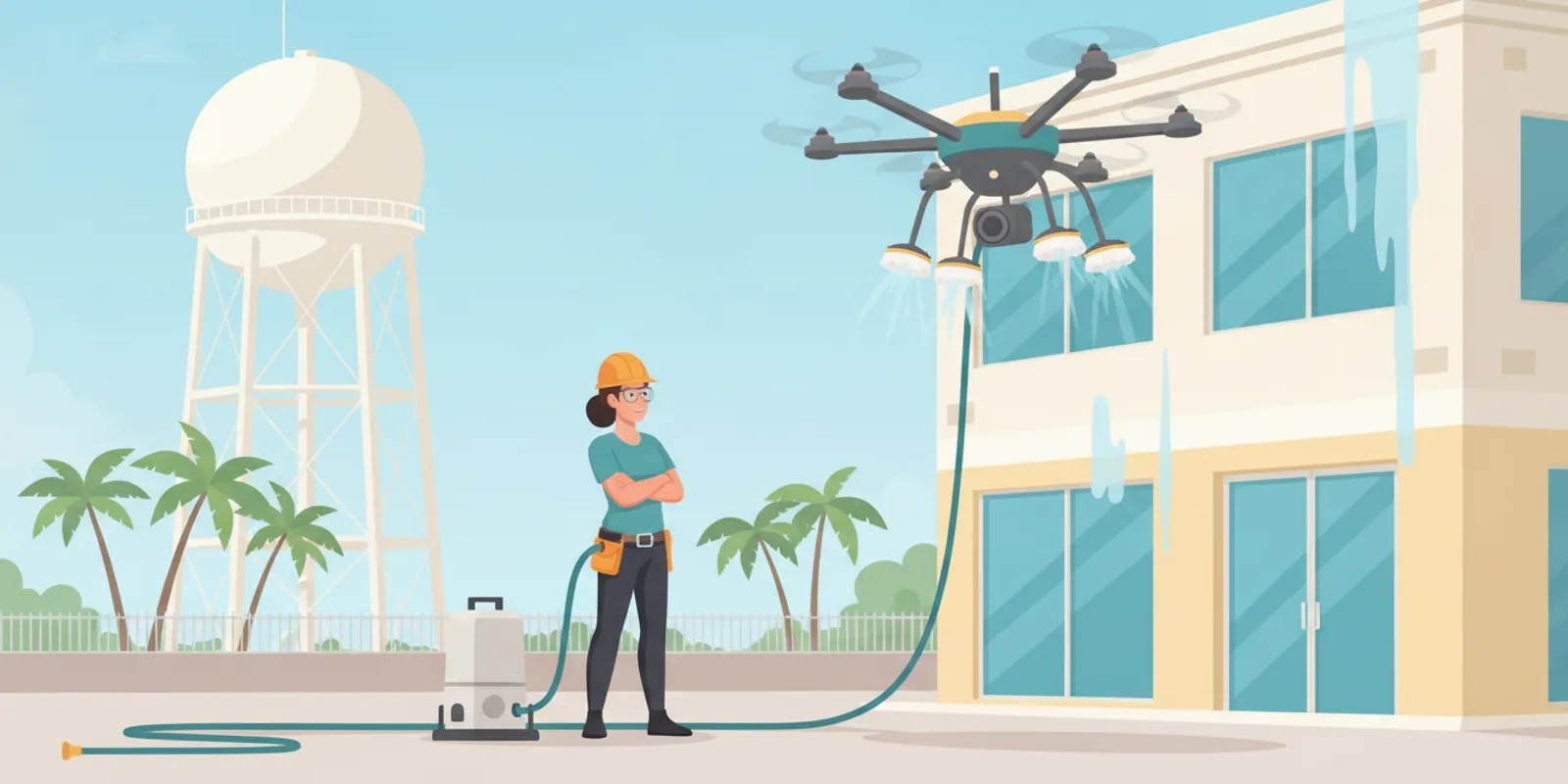
For drone cleaning, ask how the system supplies water and how the operator controls the work. Skybots uses batteries, while a connected hose carries water to the cleaning equipment. The provider should explain the setup for the specific site, including the water connection, hose route, operator position, and how the team will keep the work area organized.
What should West Palm Beach commercial exterior cleaning plans say about safety?
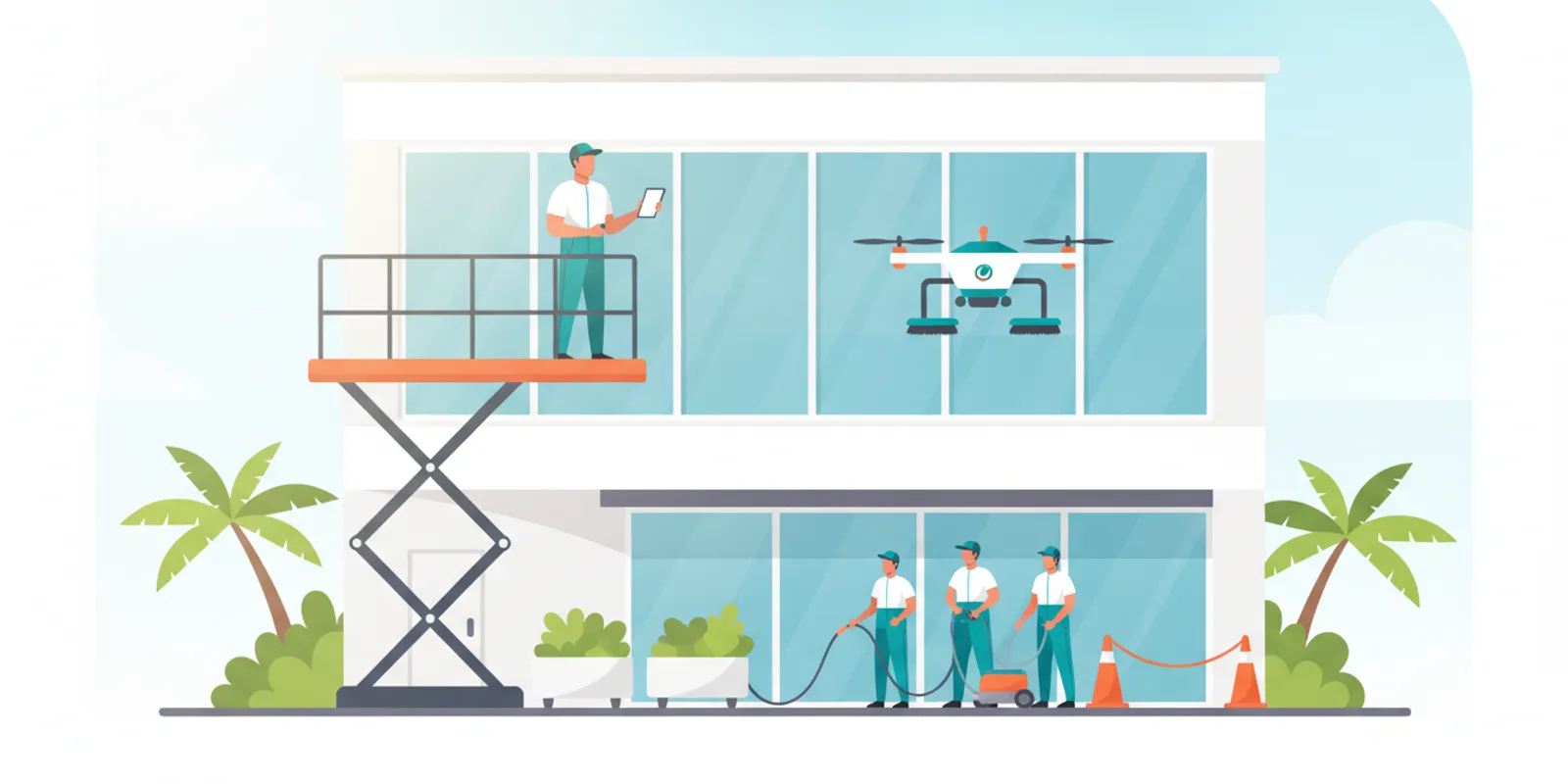
Ask how the provider will assess the work area, control access, communicate with people on site, and respond if conditions change. Safety planning is specific to the property and task. It should account for building users, visitors, vehicles, neighboring properties, ground conditions, equipment setup, and the day’s operating conditions.
For drone work, ask how the team evaluates flight paths and nearby obstacles. Clear flight paths and open access are important operating considerations. Ask who will coordinate with the property representative and what will happen if weather, site activity, or an unexpected obstruction makes the planned work unsuitable.
Also ask about the provider’s operating standards and responsibilities. Skybots uses professional operators and structured work processes. A property manager should be able to identify the on-site point of contact, understand which areas may need temporary access controls, and know how updates will be shared during the job. Do not assume that a particular access system is required or inappropriate; the method should be chosen for the property and task.
Who is the designated contact during the work?
How will occupants, tenants, or visitors be notified?
What areas may need to be temporarily kept clear?
How will the team pause or adjust if site conditions change?
What insurance and operating documentation can the provider share?
How can you compare proposals and quotes fairly?
Compare the scope and assumptions first, not just the bottom-line price. One quote may cover more elevations, more detailed preparation, or different surfaces than another. Ask each provider to list included areas, proposed methods, exclusions, access assumptions, water requirements, scheduling assumptions, and any circumstances that could change the quote.
Skybots prepares a custom quote after an on-site inspection. Cost can depend on the building’s size and configuration, the surfaces and their condition, access, water availability, and the work requested. There is no universal rate that applies to every property. Ask which details are confirmed in the quote and which might require a change order or separate approval.
Use a consistent comparison checklist:
- Scope:
Are the same buildings, elevations, and surface areas covered?
- Methods:
Does each proposal explain the approach by surface and location?
- Access:
Are water access, staging, flight-path, and work-zone assumptions clear?
- Schedule:
Does the planned timing account for building operations and resident or tenant communication?
- Closeout:
What documentation, issue reporting, or follow-up is included?
If you are considering recurring maintenance, ask for the available scheduling options and how repeat visits would be scoped and priced. Do not assume that a recurring schedule automatically costs less. Frequency should reflect the property’s exposure, appearance needs, surface condition, and budget. Ask whether each visit would cover the same areas or whether the scope can be adjusted over time.
How should managers coordinate cleaning with daily operations?
Ask for a work plan that names the sequence, expected work areas, timing assumptions, and owner responsibilities. It can help to ask for a brief pre-work checklist that your facilities team can complete before the crew arrives. Confirm that exterior water access is available and identify who can authorize its use. If there are separate water points, locked service areas, or building rules for equipment routes, flag them during the inspection rather than on the work day.
Clarify how the team will address surface-specific concerns. For example, a glass section, painted panel, masonry surface, and entry canopy may not call for the same technique or cleaning sequence. Tell the provider about past repairs, coatings, sealants, or known areas of sensitivity. Ask whether the proposed method should first be reviewed for a limited area or adjusted based on the material. That conversation helps set a reasonable scope without assuming every visible mark can be removed through routine cleaning.
For buildings with tenants or customers, ask what notice should say and when it should be distributed. Simple information such as the expected work window, affected entrances, temporary access changes, and a contact for questions can help people plan. The property team should also decide how to handle deliveries or scheduled events that overlap with the proposed work. The provider can then build the sequence around the constraints confirmed during the site review.
For an occupied office, residential building, or retail property, coordination can be as important as the cleaning method. Confirm who will notify tenants, who will arrange access to water, and who can approve a change if an unexpected condition is found.
Discuss the operating calendar. Identify delivery periods, busy entrances, events, sensitive equipment, parking restrictions, and any areas that should remain open. If cleaning can be divided into phases, ask how the team would sequence them to limit disruption while still completing a coherent scope. The right sequence depends on the site, so ask for a plan rather than promising a fixed duration before the assessment.
Before the scheduled visit, agree on a simple communication routine. The property contact should know when the team expects to arrive, where the work begins, how to reach the on-site lead, and how an issue will be reported. A short post-work review can confirm completed areas and identify anything that needs attention.
What should you expect after the work is complete?
Ask how completion will be checked and communicated. Agree on what counts as completion for the quoted scope, how the provider will flag areas that could not be addressed, and whether photos or a written closeout note will be shared. This makes follow-up more useful than a general “job done” message.
Discuss how long the results are likely to last and how often service may make sense for your property. Conditions vary with exposure, weather, nearby activity, surface type, and the appearance standard the owner wants to maintain. A provider can recommend a practical interval after reviewing the site, but the schedule should be based on the property’s needs rather than a blanket promise.
Skybots provides a three-day feedback window with free touch-ups when applicable. Ask how to submit feedback, which areas are covered, and what is meant by a touch-up for the specific project. This is a defined follow-up process, not a promise that every concern or condition falls under the same remedy.
Frequently Asked Questions
Is drone cleaning suitable for every West Palm Beach commercial property?
No. Suitability depends on the building’s height and configuration, surface, access, water availability, and clear flight paths. Skybots generally considers drone cleaning for buildings starting at three stories and up to approximately 19 to 20 stories, but the property needs an inspection before a method can be recommended.
Can a drone clean windows as well as a person using a squeegee?
They are different approaches. A squeegee is a hands-on method for accessible glass, while drone cleaning applies water and cleaning action from outside the building. The right choice depends on the glass, access, desired finish, and job scope. Ask the provider to explain the expected result for your specific windows rather than treating the methods as interchangeable.
How much does commercial exterior cleaning cost?
There is no single price for every building. The quote depends on the requested scope, building configuration, surface condition, access, and other site requirements. Skybots determines pricing through an on-site inspection and custom quote.
How often should a commercial property schedule exterior cleaning?
It depends on the property’s exposure, surfaces, operating needs, and preferred appearance. Ask for a recommendation based on the inspection and discuss recurring schedule options. The appropriate interval can differ across elevations and surfaces.
Plan a West Palm Beach exterior cleaning assessment
Before selecting a provider, make sure you can explain what needs cleaning, what the building requires, how people and operations will be protected, and how completion will be reviewed. A clear inspection-led scope gives your team a practical basis for comparing proposals and planning the work. To discuss service fit, review Skybots’ cleaning services, learn how the process works, or request a property assessment and custom quote.
For more planning guidance, read about commercial facade cleaning, exterior surface cleaning methods, reducing downtime during cleaning, and setting a window cleaning schedule. You can also review Skybots’ company background before starting a conversation about your property.
A focused inspection and a clear written scope help West Palm Beach property teams choose exterior cleaning work that fits the building and its day-to-day needs.

Comments