

Window Cleaning Services: Solar Panel Robot Fit
Cleaning a commercial solar array is not simply a matter of putting a machine on the panels and pressing start. The right approach depends on the array's layout, surface, access points, nearby obstacles, available water, and the conditions on the day of service.
A solar panel cleaning robot typically uses guided equipment to move across photovoltaic surfaces and remove dust or residue with controlled contact. For commercial properties, the bigger question is site fit: a managed cleaning approach may work when access, staging, clear paths, materials, and weather can be reviewed in advance. This is different from standard window cleaning services, which focus on glass openings and facades.
Skybots provides battery-powered equipment operated by trained professionals, not a productized autonomous panel robot. Understanding that distinction makes it easier to evaluate the technology. Property teams can then plan for access, scope, and the timing of an on-site feasibility review.
What Is a Solar Panel Cleaning Robot?
A solar panel cleaning robot is automated equipment designed to move across photovoltaic panels and remove surface buildup. Depending on the system, it may use brushes, water, or another cleaning method while following a planned path over an array. The term describes a category of equipment, not one universal machine. Site layout, panel construction, access, and the operator's process all affect whether a particular system is appropriate.
Many products described as solar panel cleaning robots are crawler-style units. They are placed on or beside an array, guided across rows, and then retrieved when the work is complete. That approach can suit some low-slope, accessible installations. It also leaves the property team responsible for equipment handling, storage, charging, maintenance, setup, and safe access to the panels. A crawler is not automatically the right answer for a commercial site with divided arrays, obstacles, difficult staging, or limited roof access.
Skybots takes a different approach. The company provides a managed solar-panel cleaning service using battery-powered drone equipment operated by trained professionals. Skybots does not present its service as an autonomous solar panel cleaning robot. Operators assess the property, plan the work, monitor execution, and apply site-specific safety decisions. That distinction matters because the equipment is only one part of a commercial cleaning solution.
The practical question is not whether a robot sounds advanced. It is whether the chosen method fits the building, array, surroundings, water access, staging needs, and weather conditions. Professional window cleaning services follow a similar principle: trained staff and appropriate equipment are matched to the building rather than selected by label alone. Skybots begins with an inspection and feasibility review before proposing a scope. You can review the site inspection and cleaning process to see how that decision is structured.
How Does a Solar Panel Cleaning Robot Work on Commercial Arrays?
A commercial solar-panel cleaning system starts with the property, not the machine. Although some equipment is marketed as an autonomous solar-panel robot, Skybots does not present its service that way. Skybots uses battery-powered drone equipment operated and monitored by trained professionals. The method, equipment, and work plan are selected after a site-specific feasibility review.
- Inspection and feasibility.
The team reviews the building or array, including height, panel and surrounding materials, access points, available water, nearby structures, cables, trees, and other obstacles. Weather is part of the decision as well. Wind, rain, or other conditions that create a safety concern can require the work to pause or be rescheduled. Skybots generally evaluates drone-cleaning work from about three stories to approximately 19 to 20 stories, depending on the site and operating conditions.
- Setup and access planning.
Once the property is considered suitable, the team defines the cleaning scope and plans staging. That may include a vehicle or equipment staging area, a practical water source, clear flight paths, and coordination with the property team. The plan should also account for sensitive materials, occupied areas, timing, and any access method needed for portions of the site. This is why equipment can vary from one building to another, rather than following a fixed robot program.
- Controlled cleaning.
Trained operators position and monitor the equipment while water and the selected cleaning approach are applied to the solar-panel surfaces. The work is controlled around the array, surrounding structures, and changing site conditions. It is not an unsupervised machine left to navigate the property on its own. A managed process can help commercial teams keep the scope clear while limiting unnecessary disruption.
Post-service review.
After execution, the team reviews the completed scope and communicates any relevant observations. Skybots provides a three-day feedback window, with free touch-ups for residue or missed areas when applicable. Property teams can review the full
site inspection and cleaning process
before requesting an assessment and custom quotation.
For commercial arrays, the central question is not whether a solar-panel robot can operate in theory. It is whether the property, materials, water access, staging, flight path, height, and weather support a controlled service delivered by qualified operators.
How Do Window Cleaning Services Relate to Solar Panel Cleaning?
Window cleaning services and solar-panel cleaning both maintain important exterior surfaces, but they are not interchangeable. Window work focuses on glass openings and, in some commercial scopes, adjacent facade surfaces. Solar-panel cleaning focuses on photovoltaic modules, whose surface, layout, access requirements, and operating considerations must be reviewed separately.
The planning principles overlap. Commercial teams should define the surfaces included, schedule work in advance, coordinate with occupants, and account for weather and site conditions. The University of Washington window-washing guidance, for example, asks requesters to clarify whether a scope includes both interior and exterior sides, and notes that schedules may be adjusted for special requests. That kind of scope clarity is useful for any exterior maintenance project, including panel cleaning.
Planning consideration | Window and facade work | Solar-panel cleaning |
Primary surface | Glass windows and designated facade surfaces | Photovoltaic panel surfaces |
Scope definition | May distinguish interior and exterior sides | Defines the panel areas and site-specific access plan |
Scheduling | Advance scheduling and occupant coordination may be required | Scheduling accounts for array access, operations, and conditions |
Safety review | Equipment and training vary by building | Equipment and method must match the array and surrounding site |
Teams comparing approaches can compare window cleaning methods, but should still request a panel-specific feasibility review. Professional window cleaning guidance also recognizes that equipment varies by building and that rain or wind can pause work when conditions create a safety hazard. The same measured approach applies here: the right method depends on the surface, access, surrounding activity, and day-of-service conditions.
What Makes a Commercial Property a Good Fit?
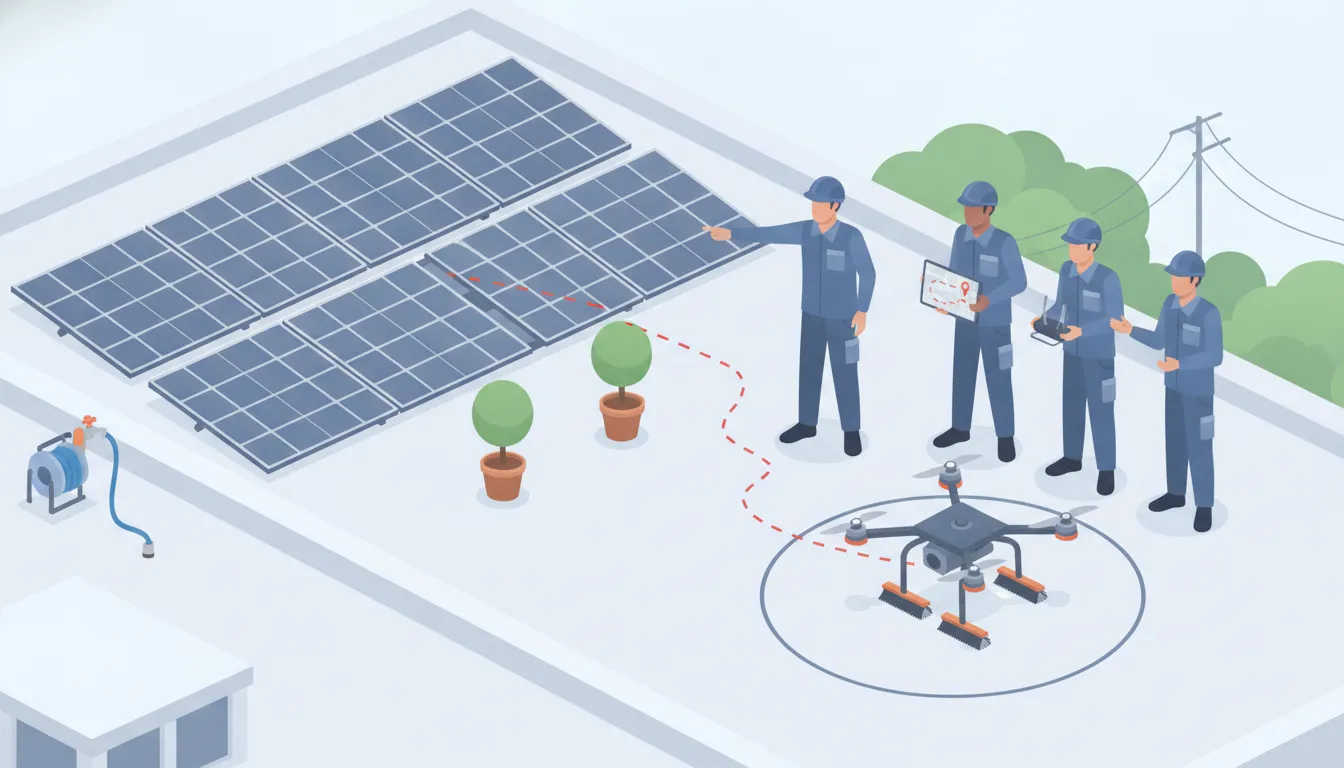
A commercial property can be a strong candidate for technology-assisted exterior cleaning when the building, surface, and surrounding site support a controlled operation. Skybots generally evaluates properties from about three stories through approximately 19 to 20 stories, depending on conditions. That range is a starting point for review, not a guarantee that every building within it is suitable.
Height and access
The inspection looks at the building's height, the location of the panels or other exterior surfaces, and how equipment can reach the work area. Open access around the property is important. Nearby structures, trees, cables, signs, roof features, and other obstacles can affect the available flight path. A clear route allows trained operators to work with better control and helps the team determine whether another access method may be more appropriate for part of the project.
Water, staging, and surface conditions
The site should have a practical water source and enough room for vehicle and equipment staging. Property teams should also identify the materials being cleaned, the panel layout, sensitive areas, and any sections that require special handling. These details help shape the equipment plan and the work sequence. A commercial property does not need to be redesigned for the service. But the crew does need a workable setup that protects occupants, surrounding property, and the surfaces themselves.
Weather and feasibility
Weather is part of the decision. Wind, rain, and changing conditions may require the team to pause or reschedule work so the operation can remain controlled. Skybots uses an on-site inspection and feasibility review to assess these factors before preparing a custom scope and quotation. The review also clarifies the areas included, expected staging requirements, and how the property team will coordinate access.
For a closer look at access considerations, see this guide to commercial solar cleaning site access. The goal is not to force one method onto every property. It is to identify where professional equipment, trained operators, and a carefully planned scope can support safe, consistent maintenance.
What Should a Commercial Cleaning Scope Include?
A useful commercial cleaning scope turns a broad maintenance request into a clear plan. It should identify the surfaces included, the areas that are not included, the expected timing, and the site conditions that may affect execution. For window cleaning services, specify whether the work covers interior surfaces, exterior surfaces, or both. That distinction matters because access, occupant coordination, and preparation can differ between the two.
Advance notice should be part of the plan, especially when crews need to enter occupied offices or shared areas. Facility teams can notify occupants, identify sensitive rooms, and coordinate cleaning around meetings, classes, deliveries, or other activity. A commercial schedule may also include special requests, such as an out-of-cycle service. A preferred workday, restricted areas, or a request to complete certain zones between periods of occupancy. Weather and site conditions may require a timing adjustment to protect workers and maintain a suitable result.
For solar panels or other exterior surfaces, the scope should also record the building layout. Access points, staging area, water availability, nearby obstacles, and any materials or surface conditions that need review. Skybots uses a four-step process: on-site inspection, customized scope and quotation, cleaning execution, and post-service review. The inspection makes the proposal specific to the property rather than based on a universal rate. For additional planning context, review these solar cleaning cost factors.
After service, the property team should know who to contact and how feedback will be handled. Skybots provides a three-day feedback window, with free touch-ups for residue or missed areas when applicable. That gives the manager a defined review period and keeps accountability part of the scope, not an afterthought.
Should a Property Team Own a Robot or Hire Managed Service?
Ownership can look attractive when a property team wants more control over routine solar-panel cleaning. It also creates an ongoing operating responsibility. The team must select equipment that suits the array, arrange delivery and storage. Charge batteries, move the unit safely, prepare the work area, and train staff to use it. It must also plan around weather, monitor the cleaning, maintain the equipment, and respond when the system needs service.
That approach may fit a property with suitable access, an experienced maintenance crew, and enough recurring work to justify managing specialized equipment. It is not automatically the simplest option for every commercial site. Panel layout, roof access, surrounding obstacles, water availability, materials, and working conditions all affect feasibility.
What a managed service includes
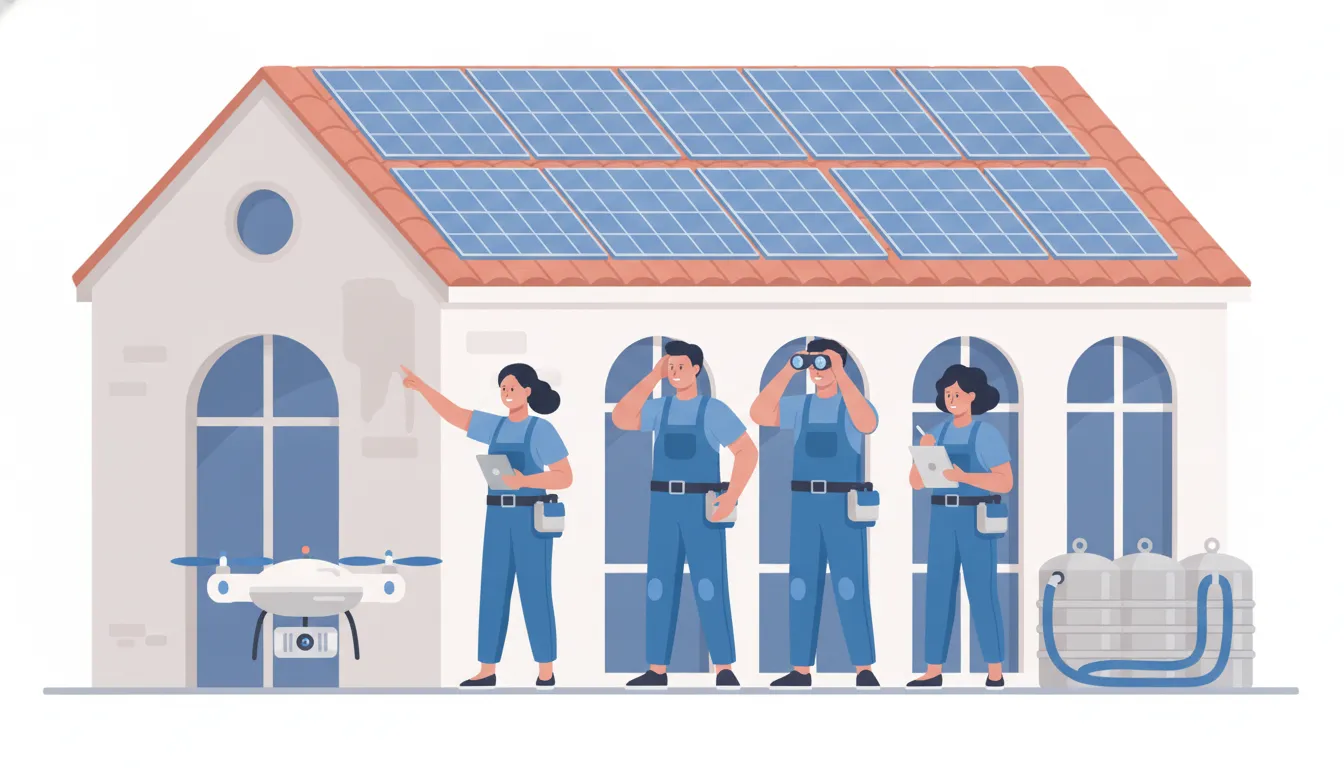
With Skybots, the property team does not buy or maintain an autonomous solar-panel robot. Skybots provides battery-powered equipment and trained operators who manage the work as a service. The process begins with an inspection of the site and its operating conditions. The team then prepares a custom scope and quote, coordinates the work, executes the cleaning, and completes a quality review.
This model also gives the property team a clear point of contact. Skybots can communicate what was assessed, what work was completed, and whether any follow-up is appropriate. If a site is not a fit for the proposed method, that should be identified during the feasibility review rather than after equipment has been purchased.
The better choice depends on staffing, access, equipment-management capacity, and the scope of the property program. Review the solar cleaning cost factors that shape a custom decision, then compare the operational requirements with your team's resources. For some owners, purchasing equipment may be reasonable. For others, a managed professional service keeps responsibility with trained specialists while the property team stays focused on building operations.
How Should Property Teams Start With Window Cleaning Services?
Start with the surfaces and the operating conditions, not with a specific piece of equipment. List the photovoltaic panels, windows, facade areas, and any access-sensitive sections that need attention. Note the building height, materials, surrounding structures, water availability, staging space, and likely obstacles such as trees, cables, or nearby buildings.
Next, request an on-site inspection. A feasibility review helps determine whether the property can be serviced safely and effectively, including whether the proposed access and flight paths are suitable. Weather and site conditions may also affect the recommended method or timing. For buildings in the general range of three to approximately 19 or 20 floors, suitability still depends on the individual property.
Once the scope is clear, the provider can prepare a custom quotation. Skybots follows an inspection, quotation, execution, and post-service review process rather than applying one universal rate. You can review the available commercial and industrial cleaning services and see the site inspection and cleaning process before making a decision.
Before scheduling, coordinate timing with occupants, tenants, security teams, and facility staff. Confirm where equipment can be staged, how the work area will be managed, and what access the crew will need. After completion, review the result against the agreed scope and raise any missed areas or residue during the available feedback window. This practical sequence gives property teams a clear basis for choosing a suitable cleaning plan without assuming that every site needs the same method.
Frequently Asked Questions
What does a solar panel cleaning robot actually do?
A solar panel cleaning robot moves across a panel array while using a cleaning attachment to remove dust, pollen, bird residue, and other surface buildup. The exact movement, water use, brushes, sensors, and operator controls depend on the equipment and the site. A commercial cleaning plan should also account for panel design, access, surrounding obstacles, weather, and safe equipment handling.
When is robotic panel cleaning a practical fit for a commercial property?
It may be worth evaluating when a property has a sizable, accessible array and a repeatable cleaning need. Fit depends on the panel layout, roof or ground conditions, access routes, water availability, staging requirements, nearby operations, and weather. An inspection is important because not every commercial array can support the same equipment or workflow.
How is the cost of commercial solar panel cleaning determined?
There is no reliable universal rate. Pricing is determined through an on-site inspection and custom quote that considers the array's size, layout, access, height, surface condition, equipment needs, water requirements, scheduling, and site constraints. A recurring service plan may be considered after the property and cleaning requirements are reviewed.
How does window cleaning differ from solar panel cleaning?
Ready to Plan the Right Cleaning Approach?
A site review can help your property team understand whether solar-panel cleaning or another managed cleaning method fits the building, access conditions, and maintenance goals. Skybots can assess the property and outline a clear scope before work begins.

Comments