

Benefits of Drone Soft Washing for Tall Buildings
The benefits of drone soft washing for tall buildings are easiest to understand when a property team treats the drone as one part of a complete maintenance process. A battery-powered aircraft can help a trained operator reach selected elevated exterior surfaces while the ground team manages water, cleaning solution, communication, and site controls. This may simplify access planning, reduce setup in suitable areas, and create a more repeatable way to maintain a building. It is not a universal replacement for lifts, scaffolding, pressure washing, or hands-on detail work. Height, surface type, weather, water access, flight paths, occupants, and the desired finish should all be reviewed first.
What are the benefits of drone soft washing for tall buildings?
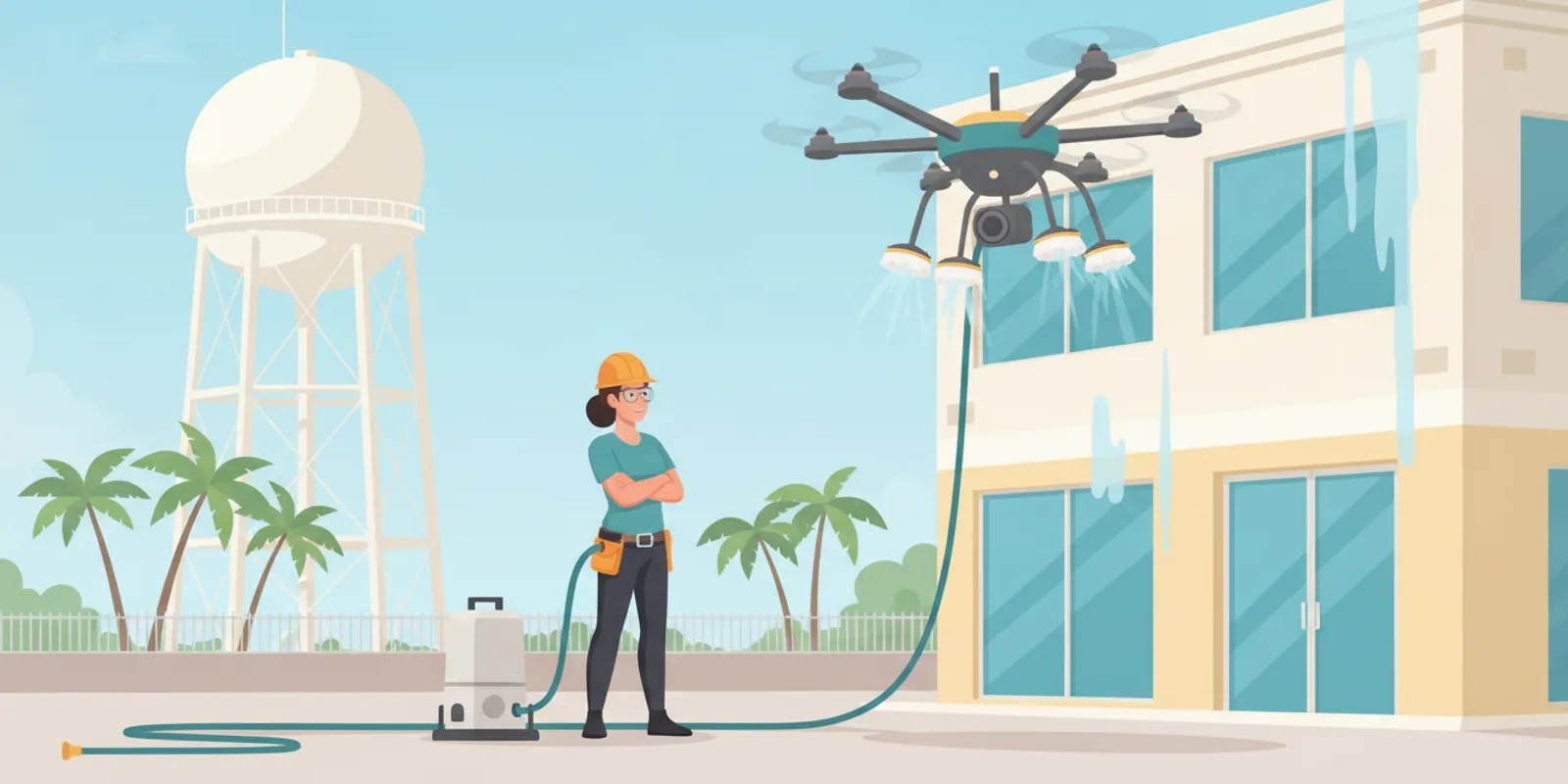
Drone soft washing combines an aircraft, a connected ground setup, a selected cleaning solution, and skilled human oversight. The aircraft helps position the spray at an elevated facade. The people on the ground remain responsible for preparation, observation, communication, and final review. That distinction matters because a drone is equipment, not a complete cleaning plan.
For a suitable building, the main benefits can include:
- Practical access to elevated areas:
A drone may reach portions of a facade that are difficult to approach from the ground, especially where the site has an open flight path and the cleaning scope does not require close hand detailing.
- Less extensive setup in selected scopes:
Some projects may need less access equipment in particular areas. Lifts or scaffolding can still be the better choice for repairs, close inspection, or detailed work.
- Controlled application:
Soft washing uses a cleaning solution and controlled spray rather than relying only on force. The operator can work in sections and observe the surface as the process advances.
- More orderly deployment:
When the site, weather, water supply, and operating conditions are suitable, the team can position the aircraft without building a large access system for every section.
- Reduced disruption potential:
A carefully planned scope may limit the amount of equipment and ground occupation needed. Occupants, pedestrians, vehicles, and neighboring property still require active site coordination.
- Repeatable maintenance planning:
A documented process can help a property team define the same areas, review results, and plan follow-up service instead of waiting for buildup to become a larger issue.
- Flexible method selection:
One building can use more than one method. An upper facade may suit drone work, reachable glass may suit a water-fed pole, and a lower detail area may need a person, lift, or another approach.
These are potential operational benefits, not a promise that every building will cost less or finish faster. Skybots determines pricing through an on-site inspection and custom quote. A meaningful comparison should include access, labor, water, cleaning products, surface condition, preparation, scheduling, and the result the owner expects.
How do the benefits of drone soft washing for tall buildings compare with other methods?
The right comparison starts with the cleaning problem, not with the newest equipment. Pressure washing may suit durable surfaces where higher pressure is appropriate. Soft washing may be a better fit when the plan calls for a selected solution and lower-pressure application. Water-fed pole cleaning can work well for reachable windows. A lift or scaffolding may provide the control needed for close inspection, repair work, tight areas, or a finish that requires direct contact.
Method | Potential fit | Questions to confirm |
Drone soft washing | Selected elevated exterior surfaces with clear flight paths and suitable operating conditions | Is the area reachable from a safe launch point? Are water, weather, people, vehicles, wires, trees, and nearby structures manageable? |
Pressure washing | Durable surfaces where a higher-pressure process is appropriate | Can the surface, drainage, nearby finishes, windows, and surrounding area handle the proposed pressure and runoff? |
Water-fed pole cleaning | Reachable windows and exterior glass from the ground or another suitable access point | Can the pole reach consistently, and will the working position support the required finish? |
Lift or scaffolding | Close access, repairs, detailed inspection, and sections with limited flight suitability | What setup, access control, time, and site coordination will the equipment require? |
A tall structure is not automatically a drone-cleaning project. Skybots generally considers drone cleaning for properties from approximately three stories up to about nineteen or twenty stories, subject to site conditions and scope. The upper end is an operating reference, not a default recommendation. Payload, wind, surface condition, water delivery, and the amount of detail required can change the answer.
For example, consider a four-story condominium with a clear courtyard, accessible water, and broad stucco sections. The upper walls may be a reasonable candidate for a controlled aerial application, while balcony glass and narrow corners may need another method. Now consider a twelve-story office building surrounded by wires, mature trees, heavy pedestrian traffic, and sensitive architectural finishes. Its height may be within the approximate range, but the site may require a different plan or a combination of methods. The inspection should identify those differences before a quote is accepted.
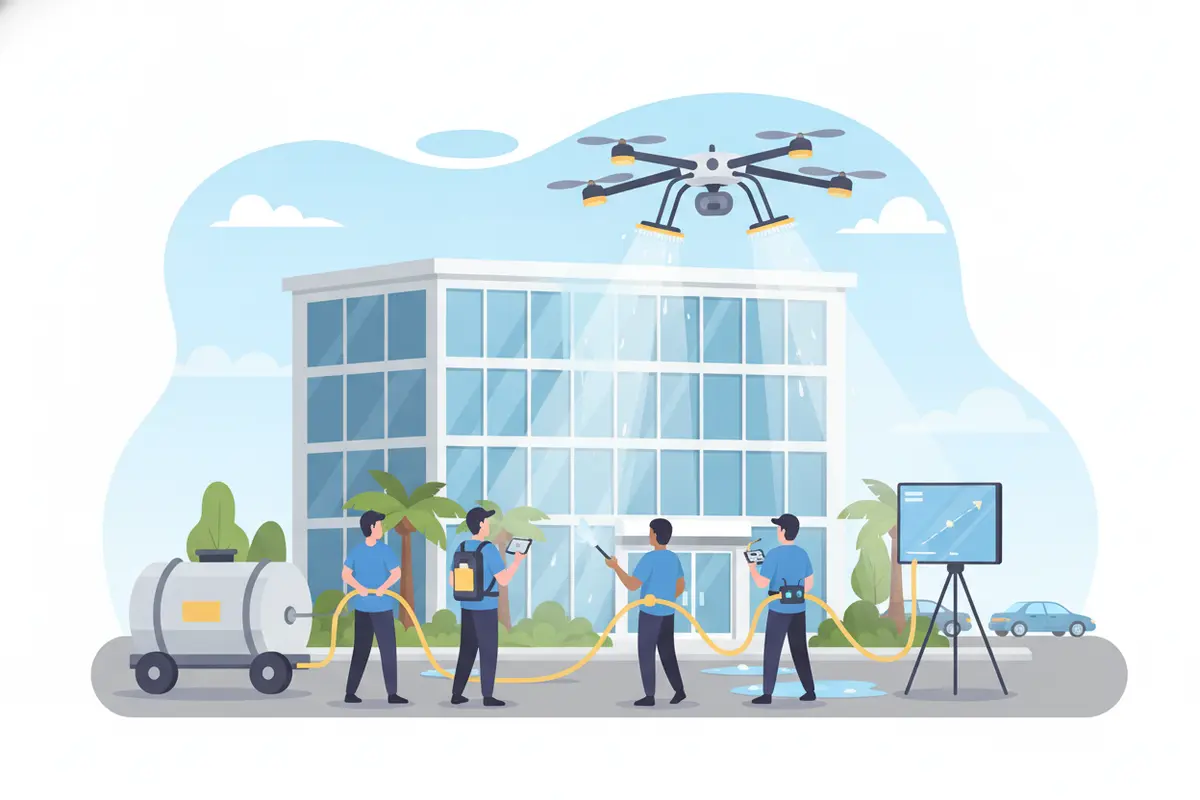
What does a drone soft washing process involve?
A professional result depends on preparation as much as flight time. The first conversation should produce a clear scope: which surfaces will be cleaned, which areas are excluded, how the team will protect surrounding property, what weather conditions apply, and how the finished work will be reviewed.
- Review the property:
Identify building height, exterior materials, windows, fixtures, balconies, landscaping, pedestrian zones, vehicles, rooflines, and possible obstructions.
- Divide the building into work areas:
Separate broad facade sections from glass, edges, fixtures, lower walls, and areas that need direct access. This prevents one method from being forced onto every surface.
- Confirm the operating plan:
Check the launch and recovery area, flight path, water access, weather window, public activity, communications, and any site restrictions.
- Select the application:
Match the solution, spray approach, and pressure to the surface and cleaning objective. A test area or staged application may be appropriate when surface response needs to be observed.
- Prepare the site:
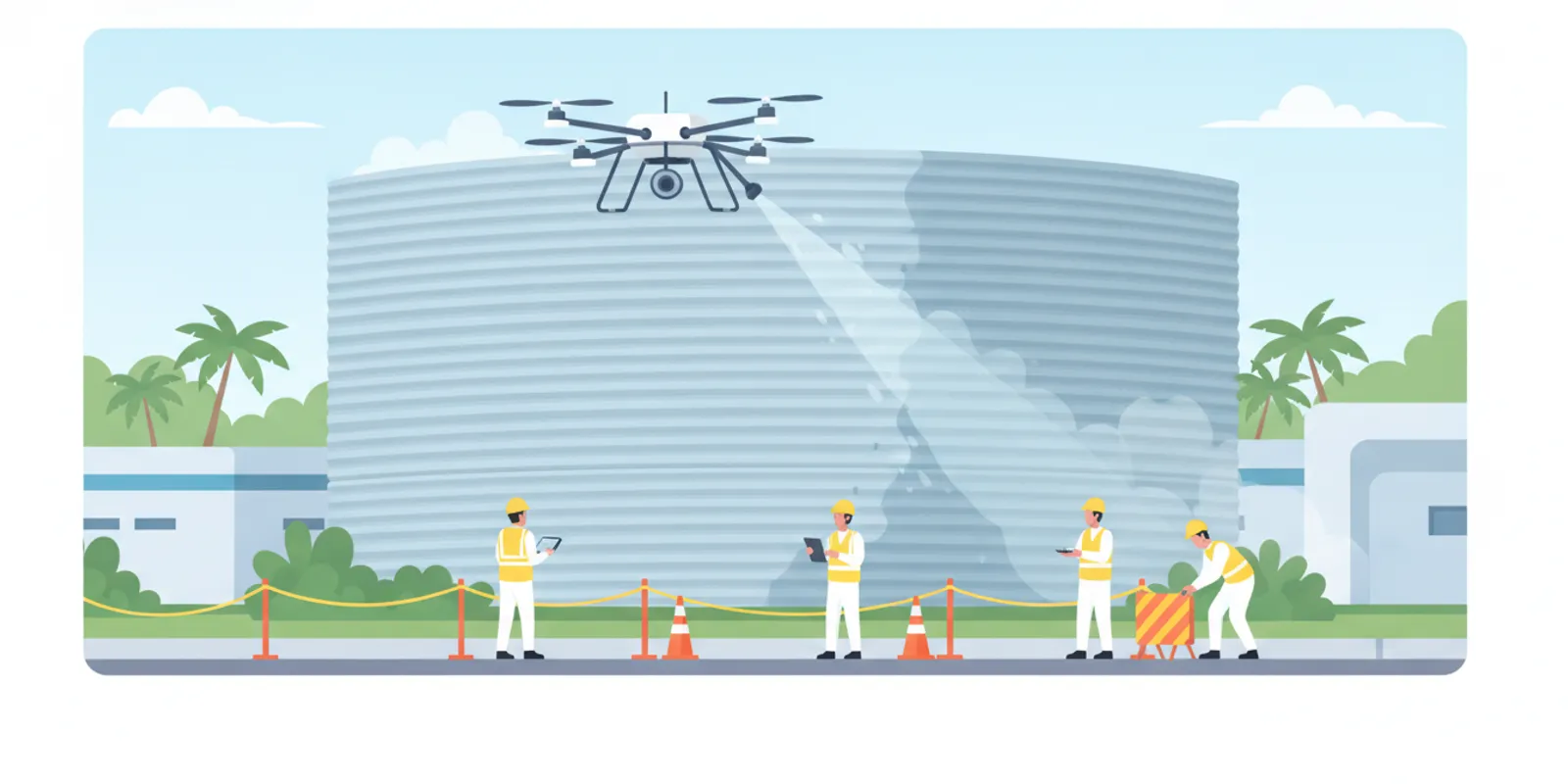
Establish a work zone, coordinate with occupants and building staff, protect sensitive areas, and communicate timing to people who may enter the property.
- Apply in sections:
The operator controls the battery-powered aircraft while the ground team manages the connected water and cleaning setup. The team should follow the agreed scope rather than treating the flight as an unsupervised task.
- Inspect and document:
Review cleaned sections, identify touch-ups, note limitations, and record recommendations for the next maintenance visit.
Regulatory planning is part of this process. The Federal Aviation Administration explains requirements and related processes for dispensing chemicals and agricultural products with unmanned aircraft in its guidance on dispensing chemicals with unmanned aircraft. A general statement that an operation uses a drone does not answer every question about a particular cleaning project. The operator and project plan should address the rules that apply to the proposed work.
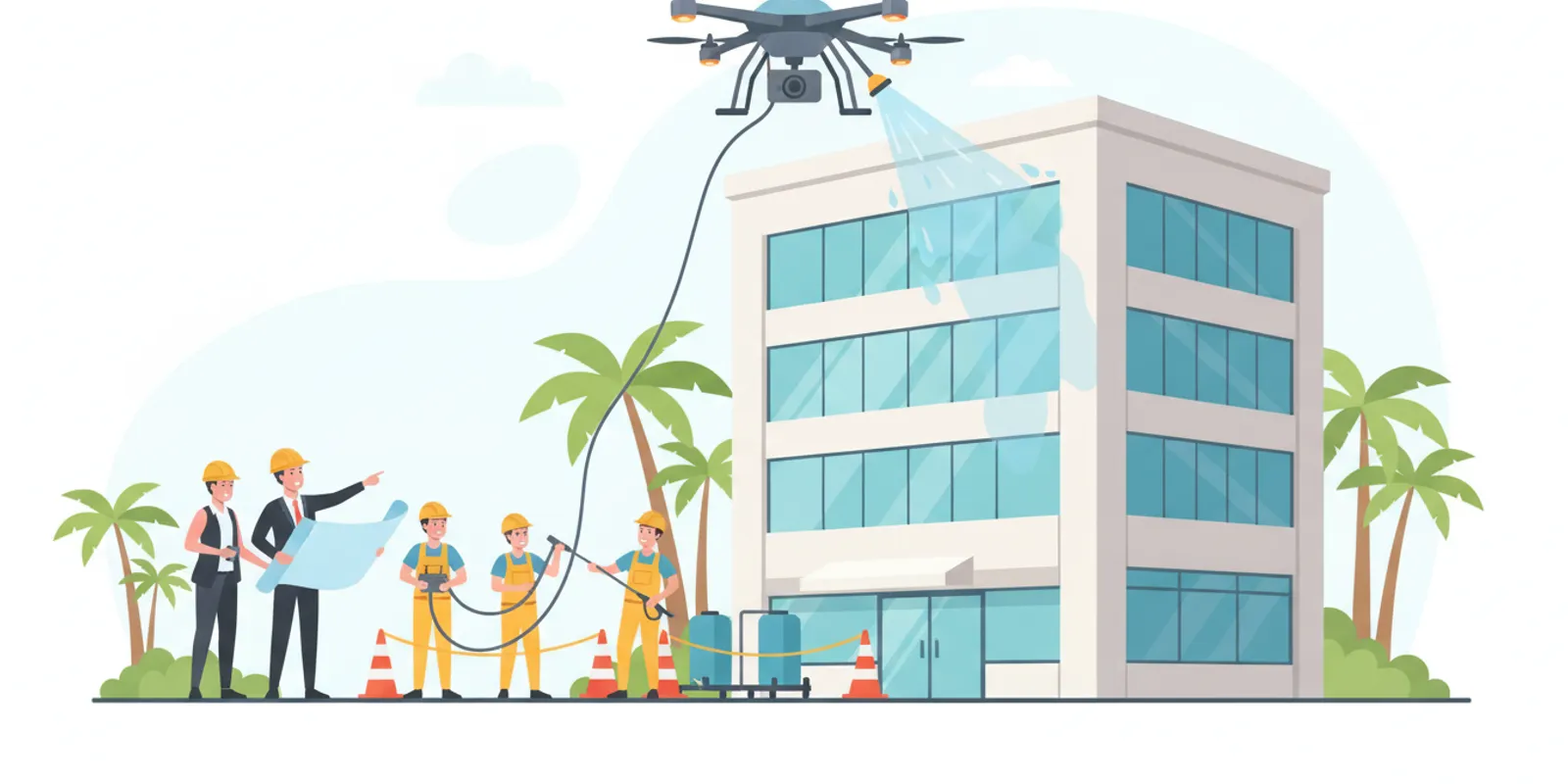
The connected-hose arrangement also deserves a clear explanation. The aircraft does not replace the ground setup. Water and cleaning solution are managed from the ground, while the operator controls positioning and application from a safe working location. The team must account for hose routing, water supply, pressure, aircraft movement, surrounding people, and recovery procedures. These details are part of service quality, not minor technical extras.
Skybots presents the technology as part of an intelligent maintenance system. Skilled people, clear communication, professional standards, surface knowledge, and post-service support all contribute to the result. Property managers should therefore ask how the provider handles the entire workflow, not only what the aircraft can reach. The overview of how drone window cleaning works in South Florida can help teams prepare for that discussion.
Are tall buildings always suitable for drone soft washing?
No. Height is only one factor. A building may be a candidate when it has a suitable exterior, open access, a clear flight path, on-site water, manageable pedestrian and vehicle activity, and weather conditions that support the work. Another property may need a different method because of wires, trees, balconies, tight courtyards, sensitive finishes, strong wind, restricted airspace, or nearby activity.
Suitability can vary across one property. The upper facade may be a good fit for a drone, while a lower wall is easier to clean from the ground. Glass may need water-fed pole work or direct detail. Repairs and close inspection may require a lift or scaffolding. This mixed approach is often more practical than choosing one method for every square foot.
Property teams can compare available approaches in the commercial drone cleaning services overview, review the guide to safe aerial washing, and read about drone cleaning versus power washing. These resources can frame the questions, but a property-specific review remains the basis for a decision.
What should a property manager ask before scheduling?
A useful provider conversation should produce a scope that can be reviewed by owners, tenants, facility staff, and anyone responsible for site safety. Ask questions such as:
Which building sections are suitable for drone work, and which require another method?
What is the approximate operating height for this project?
Where will the aircraft launch, recover, and operate?
Is reliable on-site water access available, and how will the connected hose be managed?
How will the team manage pedestrians, vehicles, occupants, landscaping, windows, and nearby property?
Which cleaning solution and pressure approach are proposed for each surface?
What weather conditions could delay or change the work?
How will building staff communicate with the crew during the project?
What does the inspection and final review include?
What areas are included in the quote, and what limitations are recorded?
How would one-time work compare with a recurring maintenance schedule?
Location can affect access and scheduling. Skybots provides information for Miami properties and Doral properties. A property team can also review Brickell cleaning considerations when relevant. A location page should support the conversation, not replace an assessment of the actual building.
How much does drone soft washing cost for a tall building?
There is no universal price for every building. A custom estimate may reflect surface area and condition, height, access, water source, cleaning method, site coordination, weather, preparation, and whether the work is one-time or recurring. An on-site inspection gives the property team a more useful comparison than a simple price per story.
When reviewing proposals, compare the scope as well as the total. Confirm which surfaces are included, whether setup and cleanup are included, what schedule is expected, how touch-ups are handled, and which conditions could change the plan. A lower-looking number may not be comparable if it excludes difficult sections, site controls, or final review.
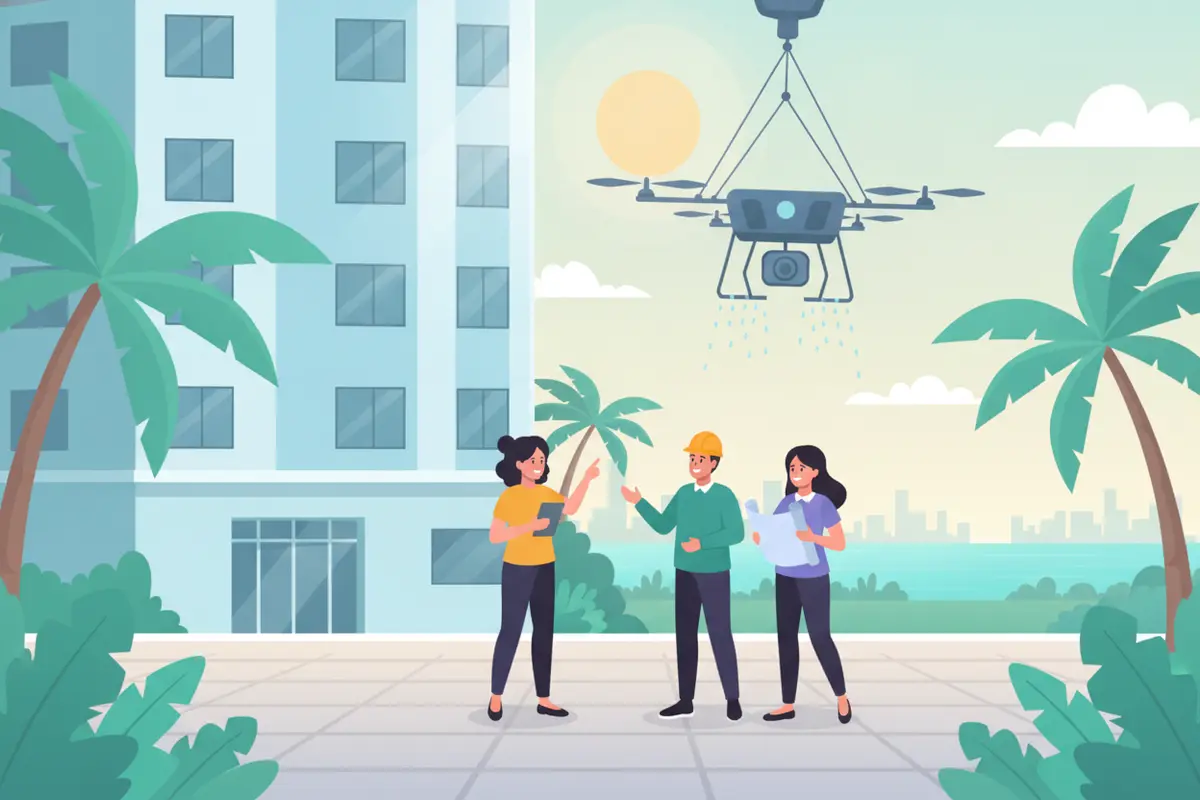
Skybots provides a three-day feedback window with free touch-ups when applicable. The scope and project context should clarify how that process applies. It should not be read as a promise that every surface, condition, or future stain will be covered.
Recurring service can make sense when a property faces repeated buildup or wants a planned maintenance rhythm. Frequency depends on exposure, humidity, salt, shade, surrounding vegetation, surface condition, and the owner's goals. A provider should recommend an interval after reviewing the property. For more planning context, see how often professional window cleaning may be scheduled and ways to minimize cleaning downtime. Recurring pricing should be discussed as a scope and schedule, not assumed to be one standard package for every building.
Frequently Asked Questions
Can drone soft washing replace a person using a squeegee?
Not in every situation. A drone can support controlled exterior application from a distance, while a person with a squeegee may be better for reachable glass, detail work, edges, or a specific finish requirement. The building design, surface, access, and desired result should determine the method.
Is drone soft washing safe for occupied properties?
It can be planned for an occupied property when the flight path, work zone, communication plan, weather, operating requirements, and surrounding activity are suitable. Occupants, pedestrians, vehicles, and nearby structures must be considered before work begins, and the site plan should explain how those risks will be managed.
How long do cleaned surfaces stay clean?
Results vary with rain, humidity, salt exposure, shade, nearby vegetation, surface condition, and local buildup. No single duration applies to every building. An inspection can help the provider recommend a practical follow-up interval.
Can homeowners use this service?
Some multi-story homes may be suitable when exterior access is difficult and the site has the required conditions. The approximate three-story minimum and property review still apply. A residential project may also need a combination of drone work and other cleaning methods.
What happens after I request a quote?
The next step is to discuss the property and arrange an inspection when appropriate. The resulting scope can identify suitable surfaces, access conditions, proposed methods, scheduling considerations, limitations, and a custom price.
Plan a building-specific cleaning approach
The benefits of drone soft washing for tall buildings come from matching suitable technology with disciplined maintenance. When a property has workable surfaces, water, weather, access, and flight conditions, the approach may support controlled application, efficient planning, less disruption, and consistent follow-up. A building inspection is the practical next step for deciding whether drone soft washing, another method, or a combination will best serve the property.
Comments