

Post-Hurricane Facade Inspection Checklist: Your Guide
Updated: Sep 15
High winds and flying debris from a South Florida hurricane can leave hidden, costly damage on your building envelope.
A post-hurricane facade inspection checklist is a structured process used by property managers to find exterior damage, ensure safety, and plan repairs after a storm. According to FEMA post-disaster guidelines, evaluations must focus on the stability of facade elements to protect people from loose materials or structural failures. This checklist helps you spot loose cladding, cracked glazing, and failing sealants so you can maintain building safety and local building code compliance. By catching small issues early, you protect your property and avoid expensive structural repairs down the road.
Every commercial property manager in Miami-Dade, Broward, and Palm Beach counties must prioritize this safety step after a storm. Let us look at what makes a good post-hurricane facade inspection checklist and how these checks protect your investment.
Why Post-Hurricane Facade Inspections Matter in South Florida
High winds and flying debris from major storms place extreme stress on building envelopes. In South Florida, property managers must act quickly after a storm to find hidden damage. A professional professional facade maintenance services assessment checks the structural health of your building. This helps keep occupants and passersby safe from sudden failures.
Protecting Safety and Re-Occupying Buildings
Falling debris and loose exterior fixtures pose a major hazard after a storm. This is why a post-hurricane facade inspection checklist is vital. The Federal Emergency Management Agency, or FEMA, outlines that post-disaster building safety evaluations must focus on the stability of facade elements. Property managers should have these inspections done before they allow people to re-occupy the building to ensure full safety.
Meeting Miami-Dade Facade Guidelines
Local rules require specific steps to confirm that your building is safe. Under the Miami-Dade County structural glazing facade inspection guidelines, a professional engineer must check the property. They use a three-level evaluation approach to look for sealant adhesion loss or physical changes. Having an independent third party run this check ensures that your exterior components meet high safety standards.
Checking for Debris and Wind Damage
Hurricanes can throw heavy objects at high speeds. These impacts crack glass and damage critical structural supports. High winds also push and pull on outer walls, which puts intense stress on the structural silicone sealants. Checking for loose cladding and joints right away helps you catch small defects before they become costly hazards.
Step-by-Step Post-Hurricane Facade Inspection Checklist
High winds and flying debris from a major storm can cause severe damage to your building. Following a structured exterior building maintenance process helps you find hidden issues before they lead to structural failure or water damage.
Establish Safe Working Conditions
Safety is the first priority during any post-storm review. Before checking the walls, you must look for immediate dangers. Walk around the building and watch for fallen power lines, loose glass panels, or hanging masonry. Block off any hazard zones with safety tape to protect workers and the public. Do not start a detailed inspection if there is an active risk of falling debris.
Perform a Level One Visual Assessment
A standard post-hurricane facade inspection checklist begins with a general visual sweep. This initial step aligns with the three-level evaluation approach described in ASTM C1394, which helps assess the impact of wind and thermal stresses. Scan the exterior walls from the ground using binoculars to find cracked tiles, loose stones, or bent metal cladding. Check the entire curtain wall framing to spot major panels that may have shifted during the storm.
Apply Hand Pressure to Sealant Joints
To verify the stability of facade elements, you must check the sealants that hold your exterior together. This step focuses on finding structural silicone sealant degradation or physical property changes. Use hand pressure on accessible joints to test how well the sealant sticks to the frame. If the sealant peels away easily or feels brittle, the joint has lost its grip and needs immediate repair to prevent panel failure.
Scan Exterior Walls for Water Staining
Water staining is a key indicator of building envelope failure. Check the walls for dark spots, damp patches, or mineral buildup near joints and windows. These marks show that rain has breached the outer barrier and is soaking into the structure. Finding these leaks early stops rot and mold from destroying your interior spaces.
- Verify safe access:
Clear the ground area around the property and set up safe paths before anyone approaches the exterior walls.
- Take photos of all damage:
Document every crack, stain, or loose piece with high-resolution photos and notes for insurance and repair records.
- Perform hand-pressure tests:
Check accessible joints by hand to verify that the structural sealant still has a strong physical bond.
- Check for interior leaks:
Inspect the inside walls and ceiling areas near the facade to see if water has made its way past the outer envelope.
- Verify tested loads:
Ensure that any physically tested loads on the glazing do not exceed the original design values used during building construction.
- Engage a professional engineer:
Contact a licensed structural engineer to perform a deep level-two or level-three evaluation if you find major structural shifts.
Common Facade Damage Types After a Hurricane
High winds and flying objects can cause major problems for a building exterior during a storm. In South Florida, property owners must understand what issues can occur. Finding these problems early helps protect the building envelope and prevents very high repair bills later. Professional commercial facade cleaning services can help find these hidden issues by removing dirt and storm grime.
Cracked Tiles and Masonry
Strong storms throw heavy debris against building walls. This flying debris can crack exterior tiles, stone panels, or brick structures. According to FEMA post-disaster guidelines, exterior elements can be severely damaged by debris impacts during a hurricane. These impacts cause deep cracks in masonry and glass. If left un-repaired, water can seep into these cracks and rot the inner steel and concrete supports.
Loose Cladding and Framing Issues
Storm winds put intense pull-and-push pressure on exterior walls. This wind force can loosen cladding panels or damage the connections that hold curtain wall framing in place. Building guidelines published by Miami-Dade County state that inspectors must check the curtain wall framing where it connects to the glass or wall panel. When these connections fail, the panels can slide out of place or fall completely, which creates a major safety risk.
Sealant Failure and Thermal Stress
Extreme storm winds push facades back and forth. This movement, combined with normal thermal expansion and contraction, puts great stress on building joints. The structural sealant must maintain its stickiness and strength while dealing with these wind loads and heat stresses. In aging buildings that use structural silicone glazing, sealants can dry out, tear, or pull away from the framing. Without a proper post-hurricane facade inspection checklist, these small sealant tears are hard to see but will let rain pour into the building interior.
How Professional Cleaning Restores Post-Storm Exteriors
High winds and storm surges leave salt crust, dirt, and heavy grime across building facades. This thick layer of dirt is more than an aesthetic issue because it coats structural parts and covers up serious structural damage. Professional exterior washing cleans the building face to make hidden issues visible, which helps you perform a complete drone facade cleaning assessment. Removing these thick storm deposits is the first step to find cracks, loose parts, or shifts in the facade panels.
Reveal Hidden Facade Issues
Grime from severe coastal weather can pack into joints and cover up failures in your building envelope. High-quality maintenance, including regular cleaning of exterior surfaces, helps expose structural issues that might otherwise be hidden by dirt or grime, according to Miami-Dade County structural guidelines. Washing away salt and soil makes it easy to inspect the building glass and framing. This clear view allows professionals to carry out a precise post-hurricane facade inspection checklist and find tiny areas of physical damage before they spread.
Protect Joints from Coastal Salt and UV Stress
Coastal storm wind drives salt deep into joint sealants, which speeds up wear on key barrier parts. Over time, salt crystals and trapped water stress the outer seals. A facade inspection checklist should include a visual assessment of structural silicone sealant. Ensuring it remains resistant to environmental stressors like UV light, moisture, and ozone, as detailed in Miami-Dade County facade protocols. Pure water flushing washes away these corrosive salt deposits without using harsh chemicals that could degrade the flexible joints. Keeping these seals clean protects their elastic quality and stops early failures.
Extend Facade Life in South Florida
Regular facade maintenance, including cleaning and inspection, is critical for extending the service life of exterior building components in coastal environments. This is noted in the Miami-Dade structural glazing guide. When facade sealant is found to be degrading, manufacturers and inspectors recommend replacement with approved materials. They follow controlled application practices to maintain the building envelope. Keeping a clean exterior prevents salt rot from wearing down structural joints. This simple step keeps your property safe, helps you pass local building safety rules, and avoids expensive repairs after major storm seasons.
Drone-Assisted Facade Care: Faster, Safer Post-Storm Recovery
High winds and salt spray from tropical storms can weaken building materials. Regular maintenance helps spot these risks early. You can learn more about scheduling in our building maintenance schedule guide. When a storm hits South Florida, property managers must check their building envelopes. They need to find loose panels, cracked tiles, or broken seals fast to keep people safe. Traditional inspection methods can take weeks to set up, but specialized cleaning drones offer a modern solution for buildings from 3 to 20 stories tall.
Rapid Deployment After the Storm
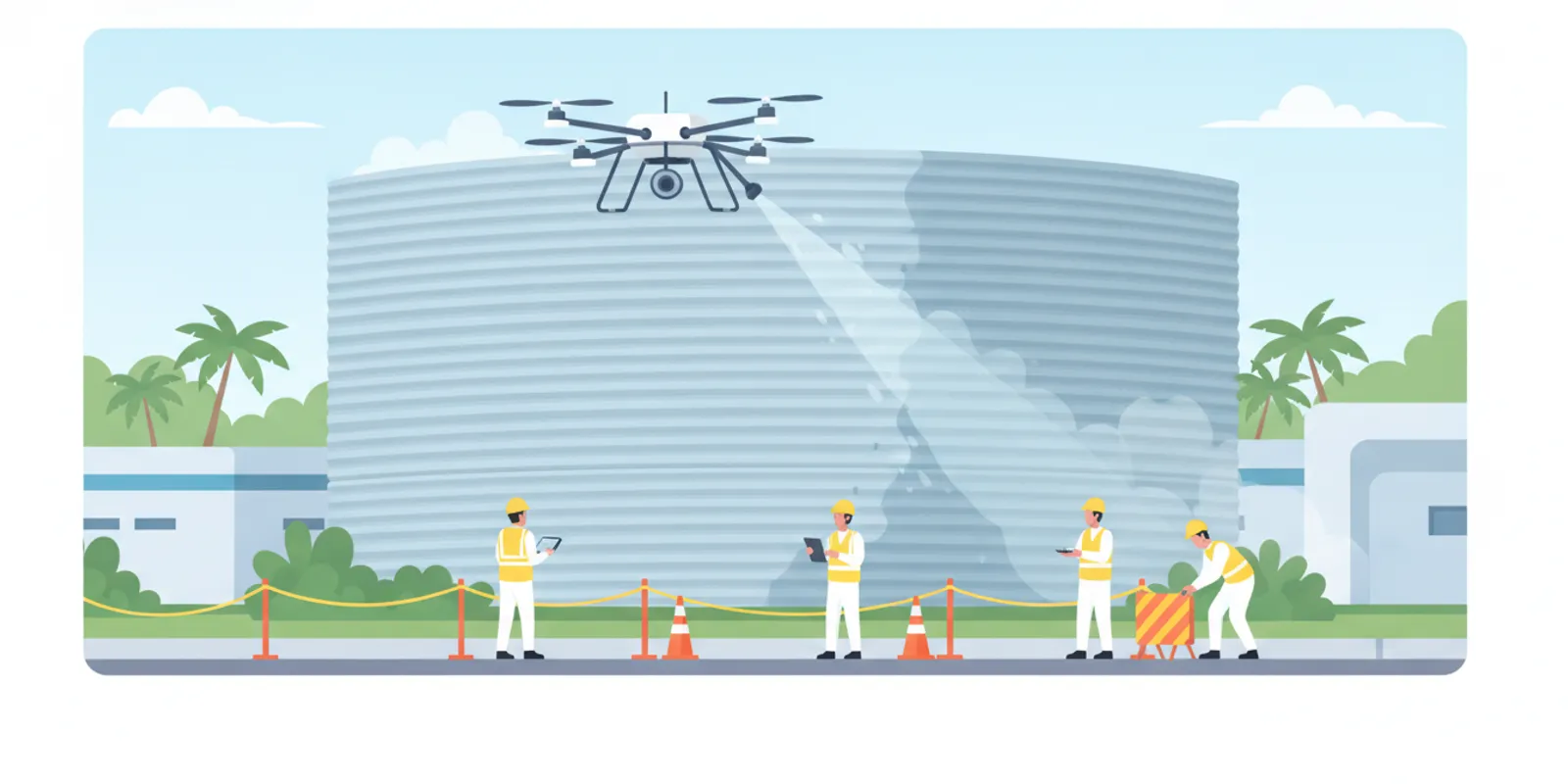
Setting up heavy swing stages or scaffolding after a hurricane takes valuable time. Our drone-assisted systems deploy up to five times faster than traditional lifts. This speed allows crews to clear salt, dirt, and debris from high-rise surfaces almost immediately. Quick cleaning exposes hidden structural issues, such as fine cracks in structural sealant, that grime might otherwise hide. According to FEMA post-disaster safety guidelines, building safety evaluations should focus on the stability of facade elements before residents return. Getting a clear view of the facade quickly helps engineers complete their post-hurricane facade inspection checklist on schedule.
How the Connected-Hose System Works
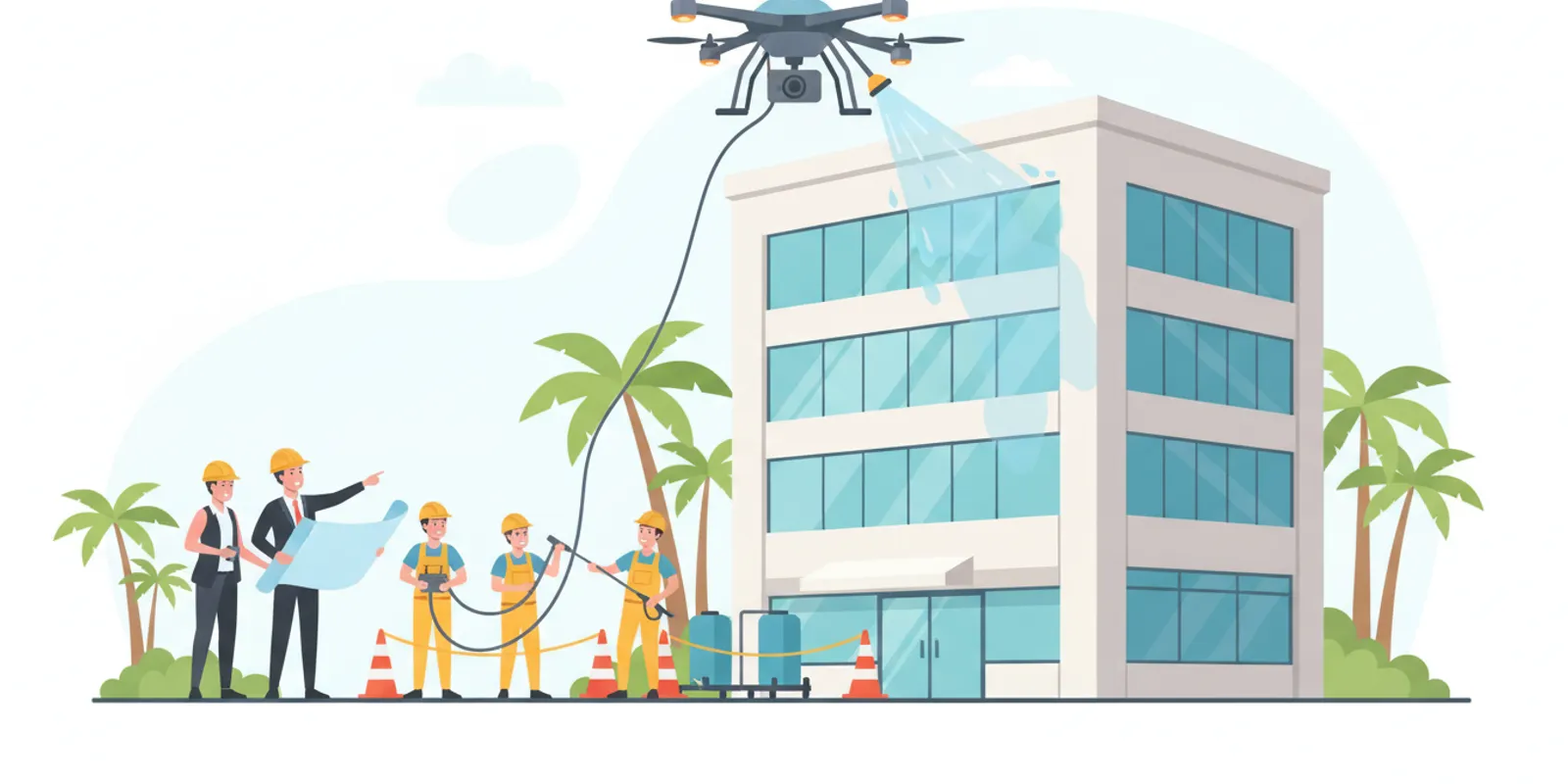
Unlike heavy machines that rely on complex rigging, cleaning drones use a lightweight setup to wash multi-story walls. The drone flies using high-capacity batteries rather than a heavy power tether. This battery-powered design keeps the aircraft agile and responsive in coastal winds. A light, high-pressure hose links the drone to a water source on the ground. The system pumps pure, mineral-free water up to the spray nozzles at height. This pure water washes away storm residue without leaving spots, which means workers do not need to hand-wipe the glass with squeegees.
Factor | Traditional Scaffolding / Lifts | Drone-Assisted Facade Care |
Setup time | Days to weeks for permit and rigging | Hours for on-site calibration |
Worker safety risk | Workers at height on swing stages | Pilot stays on the ground |
Water delivery | High-pressure hoses along scaffolding | Connected hose with pure water at height |
Insurance liability | Higher exposure for falls and equipment | Up to 5x lower insurance liability |
Best building height | Any height, but cost scales steeply | Ideal for 3 to 20 stories |
Post-service warranty | Varies by contractor | 3-day warranty with free touch-ups |
Lowering Insurance Liability and Risk
Using drones to wash and inspect high facades keeps human workers safely on the ground. This method reduces insurance liability by five times compared to traditional high-access work. Our service also includes a three-day post-service warranty with free touch-ups if any spots remain. By combining rapid drone washdowns with hands-on engineering checks, South Florida property managers can protect their assets and ensure compliance with local safety rules.
Building a Year-Round Facade Maintenance Plan for Hurricane Season
South Florida faces severe weather patterns every year. Because of this, local property managers must establish a reliable building maintenance schedule to protect their assets. This plan should not start only when a storm enters the Caribbean. A successful plan operates year-round to ensure your property remains safe and compliant.
Understand Owner Liability and Local Rules
As a building owner, you are legally responsible for the safety of your property exterior. Major municipalities, such as Miami-Dade, enforce strict periodic facade inspection rules to prevent failures. Under Miami-Dade County guidelines, you must hire qualified specialists to check your building exterior. Neglecting these rules can lead to heavy fines and major legal liability. Keeping detailed records of all checks and repairs is the best way to prove local compliance.
Clean Regularly to Prevent Coastal Damage
Coastal environments expose building facades to salt, moisture, and high winds daily. Regular cleaning is a vital part of preventive facade care. Salt buildup can corrode metal supports and degrade sealants over time. Clean walls also make inspections much easier. Washing away dirt, grime, and salt deposits helps professionals find small cracks and leaks before they become large structural hazards.
Schedule Care Between Storm Seasons
The best time to repair and wash your facade is during the calm months. Scheduling professional exterior care between storm seasons keeps your property ready for high winds. Skybots provides routine facade washing and visual checkups to help keep your building envelope secure. Incorporate these services into your plan to reduce risks and prolong the lifespan of your exterior walls.
Frequently Asked Questions
Why is a facade inspection important after a South Florida hurricane?
High winds and flying debris can cause hidden damage to structural sealants, panels, and joints. According to a FEMA study on post-disaster safety, evaluating facade stability is critical to protect occupants and pedestrians. Inspections help find loose elements before they fall, preventing severe injury and liability.
How soon after a storm should you inspect your building facade?
You should inspect the exterior as soon as it is safe to access the property. A prompt check must be done before people fully re-occupy the building. Finding loose tiles, cracked glass, or sealant failures early prevents water from entering the building envelope and causing mold or rot inside.
Who is qualified to perform a post-hurricane facade inspection?
Under local codes, the building owner must hire a qualified professional. This is typically a licensed Professional Engineer or a Registered Architect. These experts understand the wind loads and structural stresses defined in the Florida Building Code, ensuring your property remains safe and compliant.
Does your building facade need professional cleaning after a hurricane?
Yes. Storms leave salt, mud, and debris on exterior walls. Regular cleaning is vital in coastal areas to stop corrosion. According to Miami-Dade County guidelines, washing surfaces also exposes hidden cracks or sealant damage that dirt might otherwise hide.
Ready to Schedule a Post-Storm Facade Assessment?
Delaying your building inspection after a major storm can lead to hidden structural decay and costly water damage. Getting a fast, precise evaluation secures your property and helps you avoid expensive future repairs. Our team uses advanced battery-powered systems to check and clean your exterior safely without the long setup times of traditional scaffolding.
Ready to protect your property? Call (305) 395-1496 to schedule a post-storm facade assessment.

Comments