

Sunny Isles Commercial Window Cleaning Guide
For a Sunny Isles property team, clean windows are only one part of a sound maintenance decision. Coastal exposure, building design, tenant activity, access conditions, and the type of glass all affect how the work should be planned.
The right sunny isles commercial window cleaning plan starts with an on-site inspection, not a standard rate card. A qualified team should review the building's height, materials, surroundings, access, water and staging needs, then define the surfaces, method, safety controls, timing, and resources required. Pricing should follow that property-specific assessment and a customized quotation.
This approach gives owners and managers a clearer basis for comparing proposals. It also helps protect daily operations by identifying tenant coordination, weather considerations, and practical site constraints before work begins. The first question, therefore, is not simply how many windows need cleaning, but what the property context requires for a responsible scope.
Why Sunny Isles Commercial Window Cleaning Starts With Property Context
Salt air is part of the maintenance conversation for coastal South Florida properties. It can increase exterior maintenance needs, but it does not create one universal cleaning schedule or method. For a property team in Sunny Isles, the useful starting point is understanding how the building is used, what surfaces need attention, and what conditions shape the work.
A shopping center, office building, hotel, or other public-facing property may have different access points, glass layouts, surrounding activity, and presentation requirements. Even buildings of a similar height can require different plans when their materials, surface condition, landscaping, nearby structures, or daily operations differ. That context matters when managers are balancing appearance, maintenance scope, tenant continuity, safety, and budget decisions.
The glass and surrounding surfaces also deserve a practical review. The evaluation should identify the materials involved, the condition of the surfaces, and any surrounding conditions that could affect access or execution. A visible buildup near a coastal facade may be one part of the scope, while the building's access limitations or operating schedule may determine how the work can be planned.
That is why the inspection-led service process begins with an on-site inspection and feasibility review. The assessment considers building characteristics, access, height, materials, surroundings, and operational challenges before a customized scope is defined. It can also account for practical site requirements such as water access, equipment staging space, and clear paths around trees, cables, and structures.
In other words, Sunny Isles commercial window cleaning is a local decision framework, not a one-size-fits-all package. Property context helps the team select an appropriate approach, set realistic timing and resource expectations, and clarify what will be included before work begins.
What Should Sunny Isles Commercial Window Cleaning Scope Include?
A useful scope turns a general cleaning request into a workable plan for the property team. It should identify what will be cleaned, how the site can be accessed, what resources are needed, and which conditions could change the method or schedule. Skybots' inspection and feasibility review considers building characteristics, access, height, materials, surrounding conditions, and operational challenges before the scope is finalized.
Define the surfaces and access requirements
Start by listing the glass and related exterior surfaces included in the work. Note the building areas, elevations, frames or surrounding materials that require attention, and any surfaces that are specifically excluded. The scope should also describe access conditions: approximate working height, available approaches, and areas where equipment or operators may need to work. Height and materials matter because they influence feasibility and method selection. If a section of the property cannot be reached or should not be treated, record that clearly rather than leaving the assumption for service day.
Confirm site readiness before scheduling
A practical review can follow four steps:
Confirm the surfaces and elevations included.
Review access, water, staging, and nearby obstacles.
Coordinate work windows with tenants and operations.
Record exclusions and unresolved site conditions.
Ask the property team to review the practical requirements identified during the assessment:
Is suitable on-site water access available?
Where can vehicles and equipment be staged without interfering with normal operations?
Are trees, cables, structures, or other obstructions present near the intended work areas?
Can the property team identify access restrictions, tenant activity, business hours, or other operating considerations?
These details help define resource planning and make the work easier to coordinate. Flight-path planning should account for the surrounding site, including trees, cables, and structures, rather than treating the facade as an isolated surface.
Put timing and exclusions in writing
The written scope should state the selected surfaces, expected timeline, access plan, water and staging needs, and the operational arrangements agreed with the property or business team. It should also identify exclusions, such as areas that were not assessed, surfaces outside the requested service, access conditions that remain unresolved, or work dependent on site readiness. This gives managers a clear basis for coordination and keeps the final plan aligned with the property's actual conditions. Pricing should follow the property assessment, not a generic rate.
Which Cleaning Method Fits Your Building?
There is no single best approach for every commercial property. The right method depends on the building's height, materials, glass condition, surrounding obstacles, access points, operating schedule, and the level of control needed around tenants and visitors. A site assessment can determine whether one method or a combination makes the most practical sense.
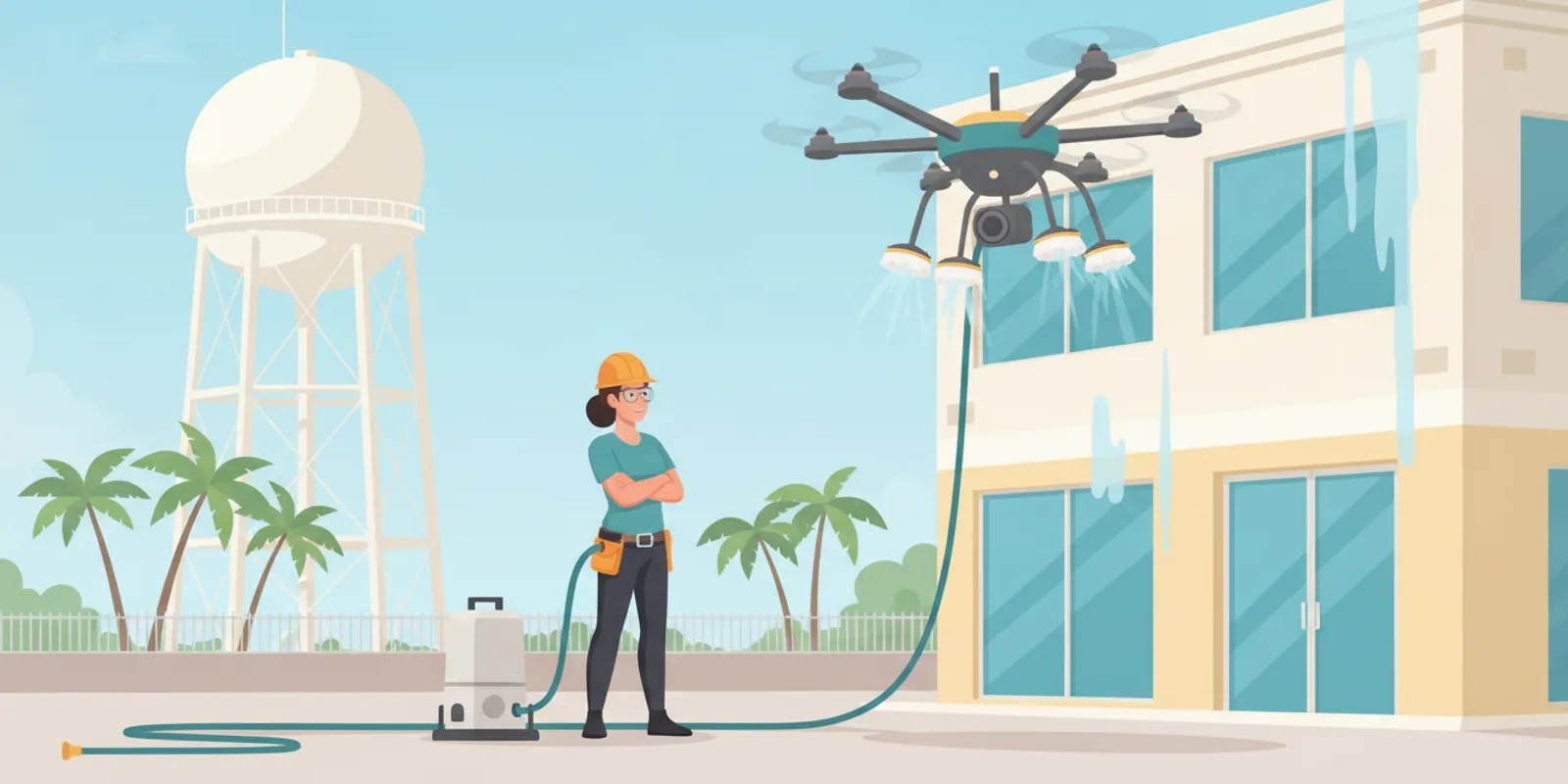
For Sunny Isles properties, the decision may include drone cleaning, water-fed poles, soft washing, pressure cleaning, lifts, scaffolding, or ground-based tools. Skybots considers building characteristics, access, height, materials, surroundings, and operational challenges during its inspection and feasibility review. Its commercial services cover offices, shopping centers, and other public-facing structures. You can review the broader commercial exterior cleaning services available for different property types.

Method | Best fit | Planning considerations |
Drone cleaning. | Suitable elevated exterior surfaces where the building and surroundings meet the method's requirements. | Review height, materials, weather, clear flight paths, nearby trees and cables, water access, and staging space. |
Water-fed poles. | Accessible windows and exterior glass that can be reached from a safe ground position. | Consider reach, building layout, surface condition, water supply, and whether interior access is also needed. |
Soft washing. | Exterior surfaces that require a lower-pressure cleaning approach suited to the material. | Confirm the surface type, surrounding landscaping, runoff controls, and any tenant or business restrictions. |
Pressure cleaning. | Appropriate durable exterior areas where controlled pressure is compatible with the surface. | Set pressure and treatment expectations after reviewing materials, adjacent surfaces, drainage, and pedestrian activity. |
Lifts, scaffolding, and other access equipment. | Locations where direct access, detailed work, or a particular elevation requires a platform or structure. | Plan equipment placement, permits if applicable, fall protection, staging, traffic control, and work windows. |
Water-fed poles can be a useful option for many accessible areas. Read more about water-fed pole window cleaning before comparing it with elevated access or other methods. The final plan should match the property rather than force the property into a preset service. Operational requirements may include on-site water, room for vehicles and equipment, and clear paths around trees, cables, and structures. Height suitability also varies by conditions, with Skybots describing a general range from three floors to approximately 19 to 20 floors. A detailed inspection remains the best way to choose a workable combination.
How Do Safety and Site Logistics Shape the Plan?
Safety begins before equipment arrives. For sunny isles commercial window cleaning, the property review should identify the building's access points, surrounding structures, operating constraints, and the method that fits the site. Skybots states that certified operators perform its work and that its commercial drone operations follow FAA requirements. Those statements describe Skybots' operating approach, not a promise that every site or method carries zero risk.
A site-specific review also turns general safety goals into practical controls. The team can assess where vehicles and equipment may be staged, whether on-site water access is available, and how people, tenants, visitors, landscaping, cables, and nearby structures affect the work area. If drone work is being considered, clear flight paths are especially important. Trees, cables, and structures should be identified before the operation is scheduled, not discovered while work is underway.
Weather is part of that plan as well. Wind, rain, visibility, and changing South Florida conditions can affect whether a planned method is appropriate on a particular day. Monitoring conditions and communicating any needed schedule adjustment helps the property team protect normal operations without treating a target date as a guaranteed completion time. The work plan should also identify who can approve access, where people should avoid during the service, and how updates will be shared.
OSHA provides a useful reference when the selected approach involves a powered platform. Its powered-platform factsheet identifies window cleaning as building maintenance covered by the powered-platform standard, describes fall-arrest requirements for employees on working platforms, and calls for a written emergency plan for power failures, equipment failures, or other emergencies. That reference should not be presented as a universal rule for every cleaning method. A drone, water-fed pole, lift, or other access approach can involve different requirements and controls, so the selected method and site conditions should guide the review.
Clear staging, flight-path planning, weather checks, and operational communication make the service easier to coordinate and easier to evaluate. They also give the property team a defined basis for discussing access, timing, responsibilities, and contingencies before cleaning begins.
How Should Property Teams Set Frequency and Scheduling?
There is no single cleaning calendar that fits every Sunny Isles property. Coastal properties experience salt-air exposure, which can increase exterior maintenance needs. But the right interval also depends on what the glass looks like, who sees it, and how the building operates. A visible entrance, ocean-facing facade, or busy retail frontage may need attention sooner than less prominent areas.

Start with the conditions that affect appearance and access:
- Exposure and surface condition:
Note salt residue, water spots, dust, construction debris, and any buildup that changes the cleaning method or scope.
- Visibility and traffic:
Entrances, lobbies, storefronts, restaurants, and tenant-facing areas may deserve more frequent review than secondary elevations.
- Weather:
Wind, rain, heat, and changing conditions can affect when work is practical and how the result should be assessed.
- Tenant and operating needs:
Coordinate around business hours, resident movement, deliveries, events, and any access restrictions.
- Available work windows:
An early, late, or phased schedule may reduce disruption, provided the site can be prepared and accessed safely.
Published commercial schedules illustrate the range without creating a rule for your building. One provider lists weekly, every-two-week, and monthly options, describing weekly or bi-weekly service as common for high-traffic retail and restaurants and monthly service as common for professional offices and medical suites. Those examples can help start a conversation, but an inspection should determine whether they fit your property.
Review the recommended interval after the first service. Changes in weather, tenants, construction, traffic, or surface condition may justify adjusting the plan. For a broader South Florida planning framework, see this commercial window cleaning frequency guide. The goal is a schedule that keeps important surfaces presentable while respecting property operations, not a completion promise that ignores site conditions.
What Should a Commercial Window Cleaning Quote Explain?
A useful quote should make the proposed work easy to understand before service begins. It should connect the property's assessed conditions to a defined scope, rather than present a vague description of cleaning. For a property team, that clarity helps align maintenance expectations, operations, and approval decisions.
Start by checking whether the quote identifies the surfaces included. It should distinguish the glass or exterior areas being addressed and note any boundaries that affect the work. The document should also explain the selected cleaning method and why it fits the property's conditions. If a particular area requires a different approach, that should be visible instead of being left for the crew to interpret on site.
Access and logistics belong in the scope as well. Look for a practical outline of how the team expects to reach the identified surfaces, along with any site conditions that need to be coordinated. The quote should identify scheduling considerations, operating windows, and property requirements that could affect the work. It can also clarify what the property team must provide or coordinate, such as access instructions, designated staging areas, or communication with occupants.
Exclusions are equally important. A clear quote should state which surfaces, conditions, preparation tasks, or additional services are outside the proposed scope. That prevents a property manager from assuming that every visible area is included.
Skybots uses an on-site inspection and feasibility review to develop a customized scope. Its process considers the property's characteristics, access, materials, surroundings, and operational challenges. The resulting scope defines selected surfaces, timelines, operational considerations, and resource planning. Pricing follows that property assessment, so there is no universal fixed rate to apply across every building.
Review the inspection-led service process and ask questions before approving the quote. A strong proposal should leave the property team knowing what will be cleaned, how the work will be planned, what cooperation is needed, and what falls outside the agreement.
How Does Inspection-Led Follow-Up Protect Quality?
Quality control should continue after the crew leaves the property. A useful follow-up compares the completed work with the standards agreed during the inspection and scope review. That may include the selected glass and exterior surfaces, the expected finish, areas requiring special attention, and any operational conditions noted before service.
For a property team, this review creates a clear record of what was completed and what may need attention later. Photos, service notes, and communication with the building contact can help distinguish a missed area from a new mark caused by weather, traffic, construction, or normal coastal exposure. The goal is not to promise that glass will remain unchanged indefinitely. It is to make the service accountable and easier to manage.
Skybots provides a three-day feedback window after service. If a client identifies residue or missed areas during that window, free touch-ups may be available when applicable. This is a defined review period for issues connected to the completed scope, not an unlimited guarantee covering every later condition or every surface concern.
Property managers can also use the review to improve future planning. Notes about access, tenant coordination, water or staging needs, and areas that required extra attention can inform the next inspection and scope. The broader window cleaning service scope guide offers additional context on defining the work before it begins.
With the finished work documented and feedback handled within the applicable window, the next step is a practical conversation about your property's cleaning scope and operating needs.
Frequently Asked Questions
How much does commercial window cleaning cost in Sunny Isles?
There is no reliable universal rate for every property. Pricing follows an on-site inspection that reviews the building, access, surfaces, operational conditions, selected method, and resource needs. The resulting quote should explain what is included, the planned timeline, and any relevant staging or water requirements. See how the inspection-led process works.
What do professional window cleaners use in their water?
Water requirements depend on the selected cleaning method and the property setup. During planning, confirm whether on-site water access is available, where equipment can be staged, and how the work will be coordinated around tenants, visitors, and building operations. The inspection should identify the practical water and equipment requirements before service begins.
What license or safety qualifications should a commercial window cleaner have?
Ask how the provider handles operator training, insurance, site-specific risk review, and method selection. Skybots states that certified operators perform its work and that its commercial drone operations follow FAA requirements. For powered-platform work, OSHA identifies window cleaning as building maintenance and addresses fall-arrest systems and written emergency planning: OSHA powered-platform guidance.
Do commercial window cleaners require a long-term service contract?
That depends on the service arrangement and the property team's needs. Ask whether the proposed scope supports one-time work, recurring visits, or an adjustable maintenance plan, and have the quote state the selected surfaces, timing, operational requirements, and review process. A clear scope matters more than committing to a schedule before the property has been assessed.
Plan Your Sunny Isles Property Cleaning Scope
A clear cleaning scope helps property owners and managers compare the right considerations for their building, from surfaces and access to scheduling and follow-up. It gives your team a practical starting point for discussing priorities, site conditions, and next steps with a service professional. Review how Skybots approaches inspection-led planning, then get started by requesting an inspection-led service plan for your Sunny Isles property.


Comments